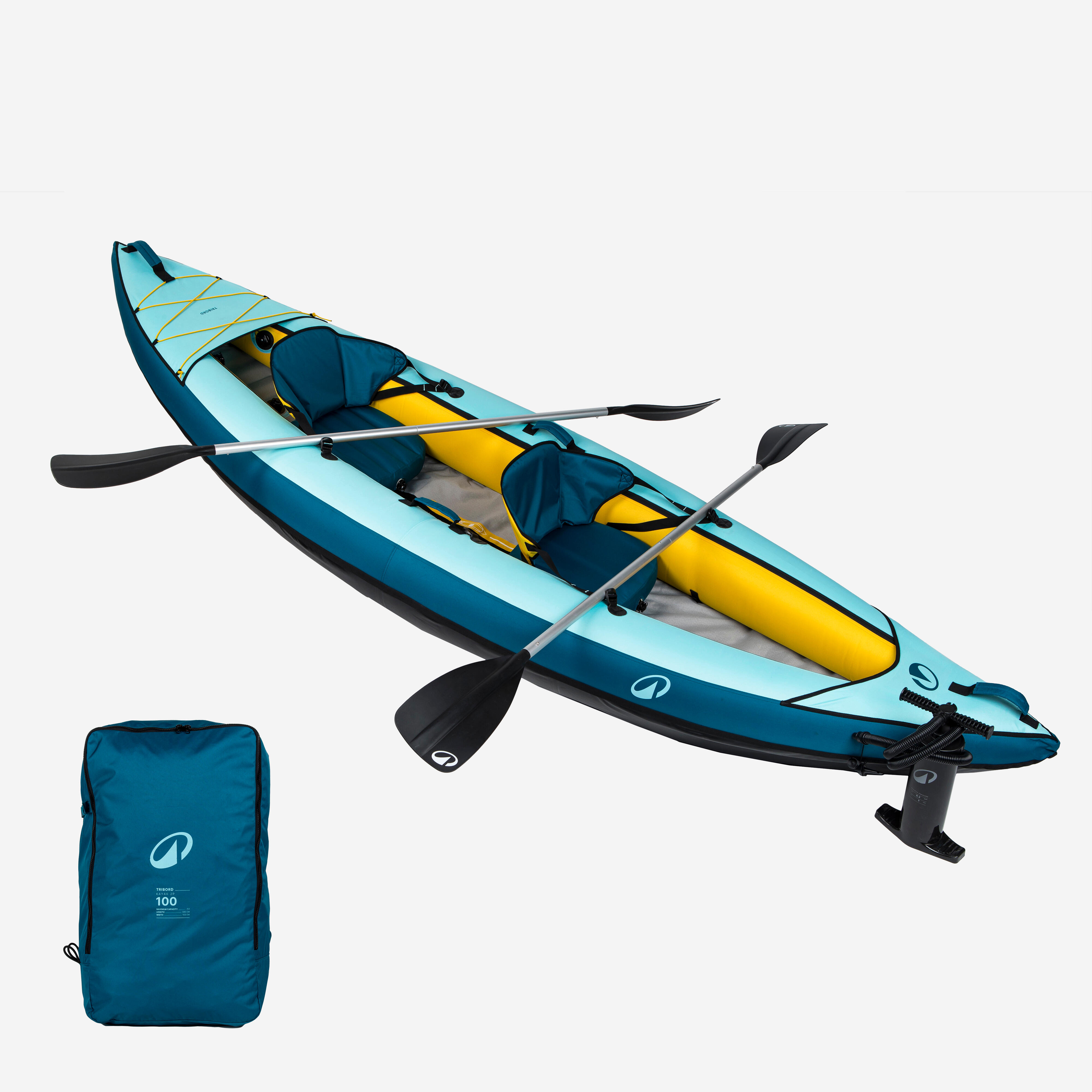
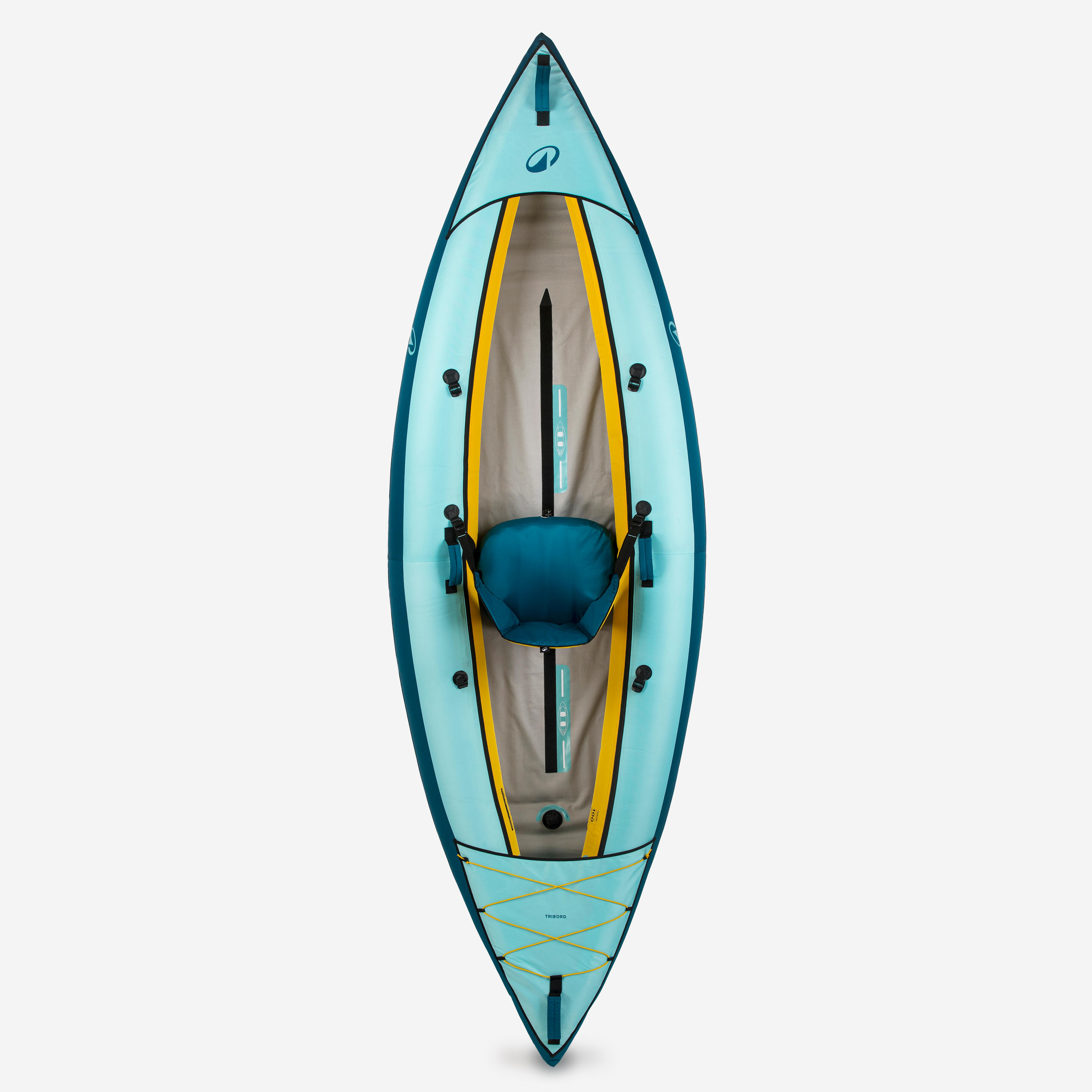
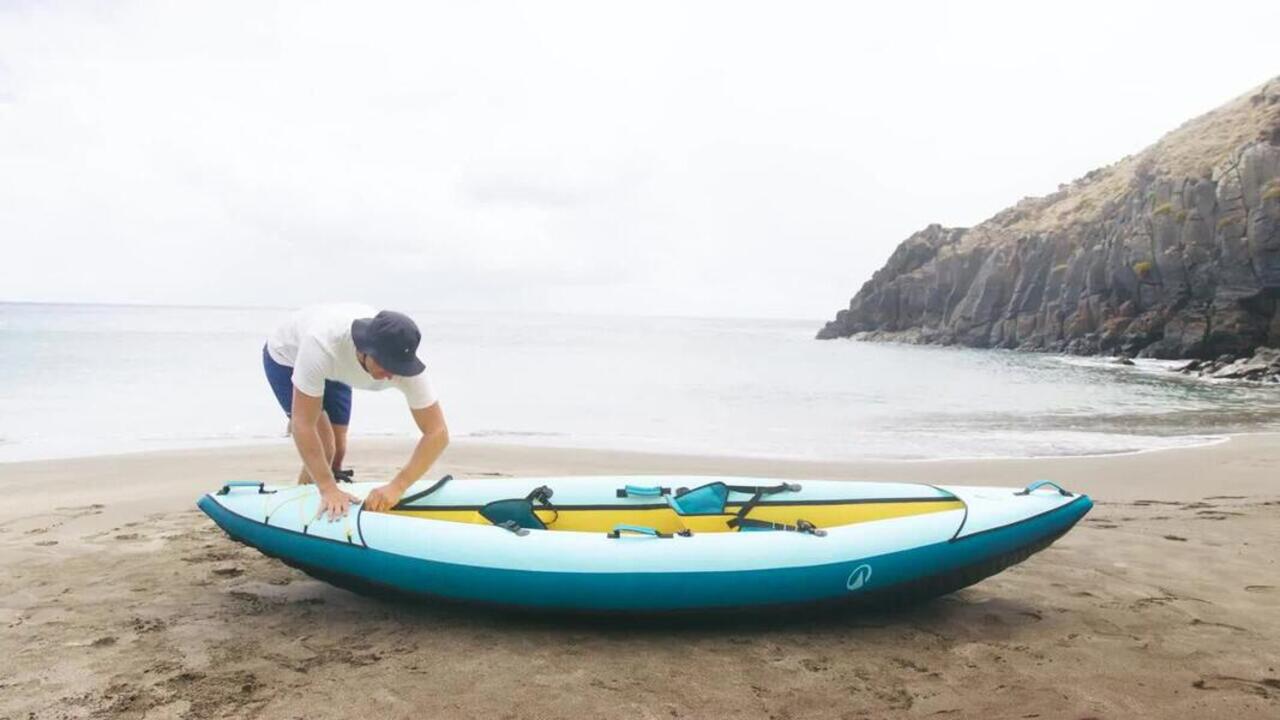
What are the dimensions, weight and maximum load?
Inflated size:
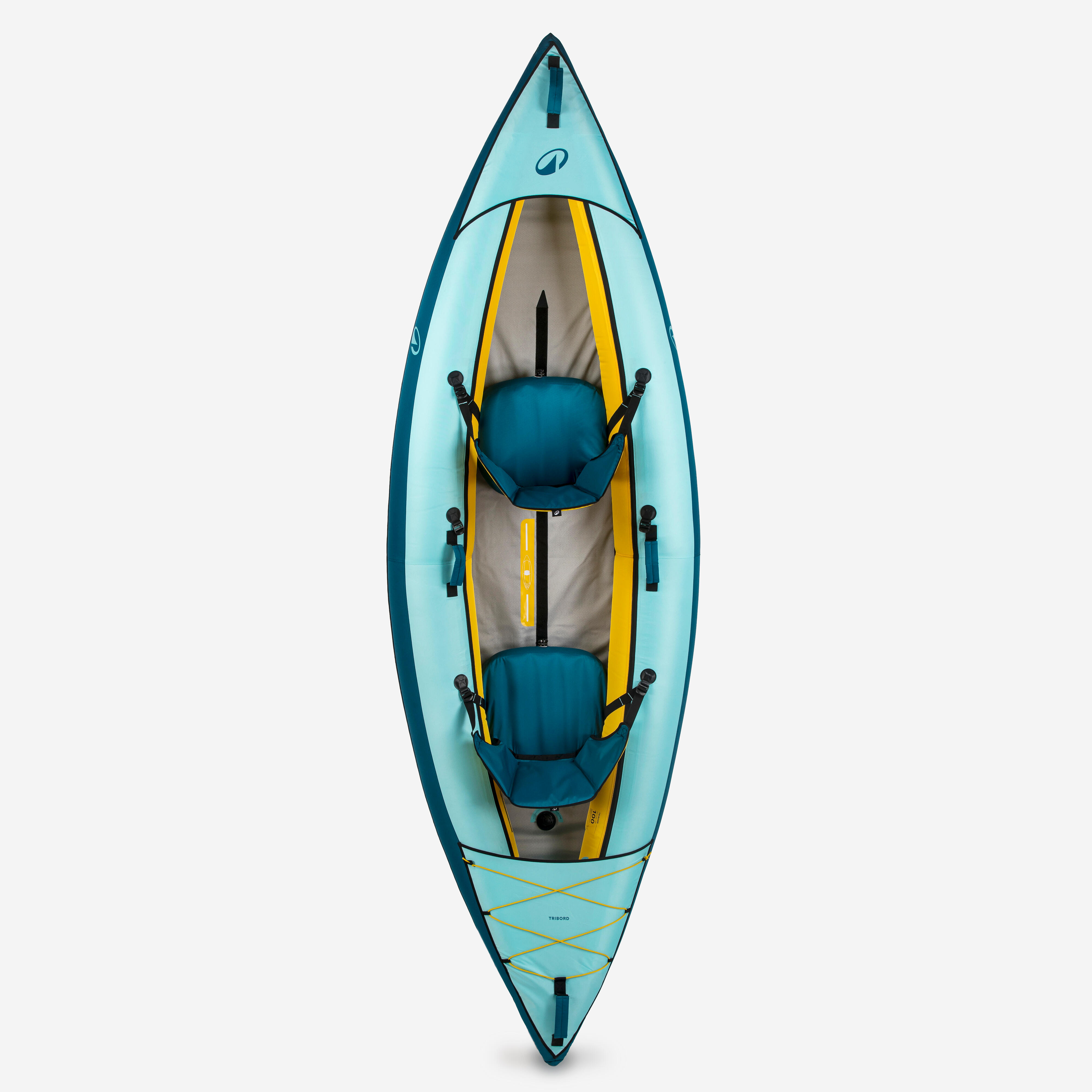
- Length: 340 cm
- Width: 103 cm
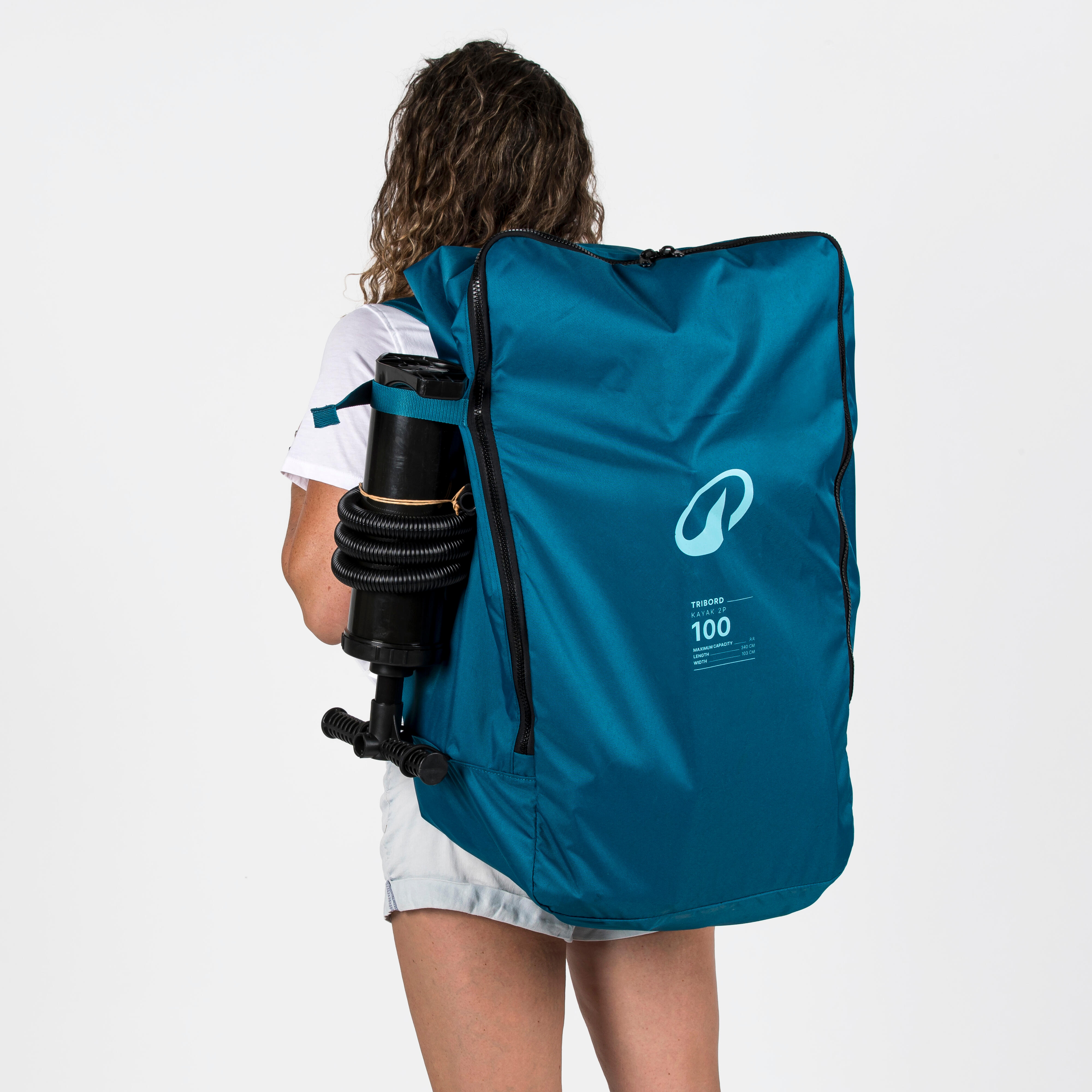
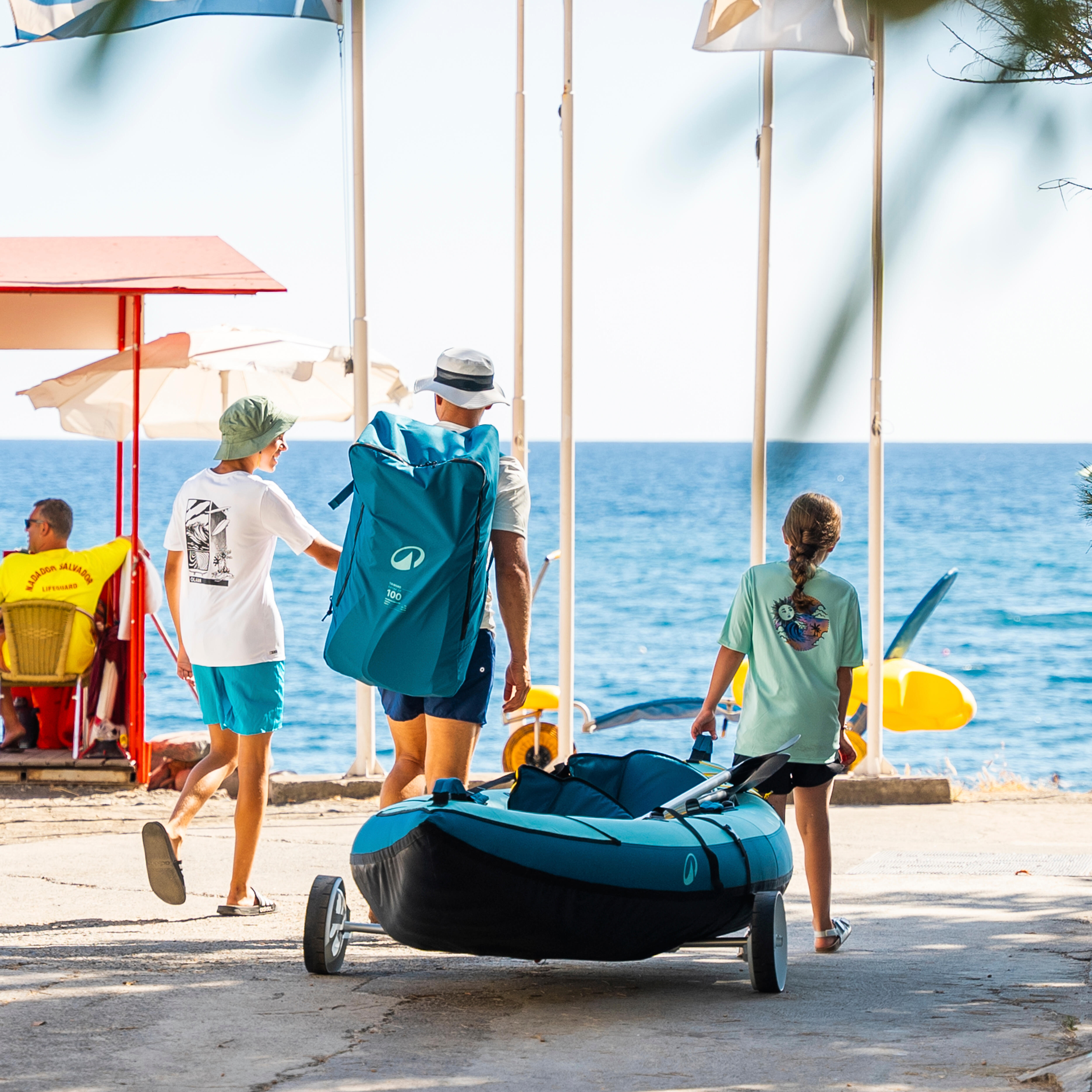
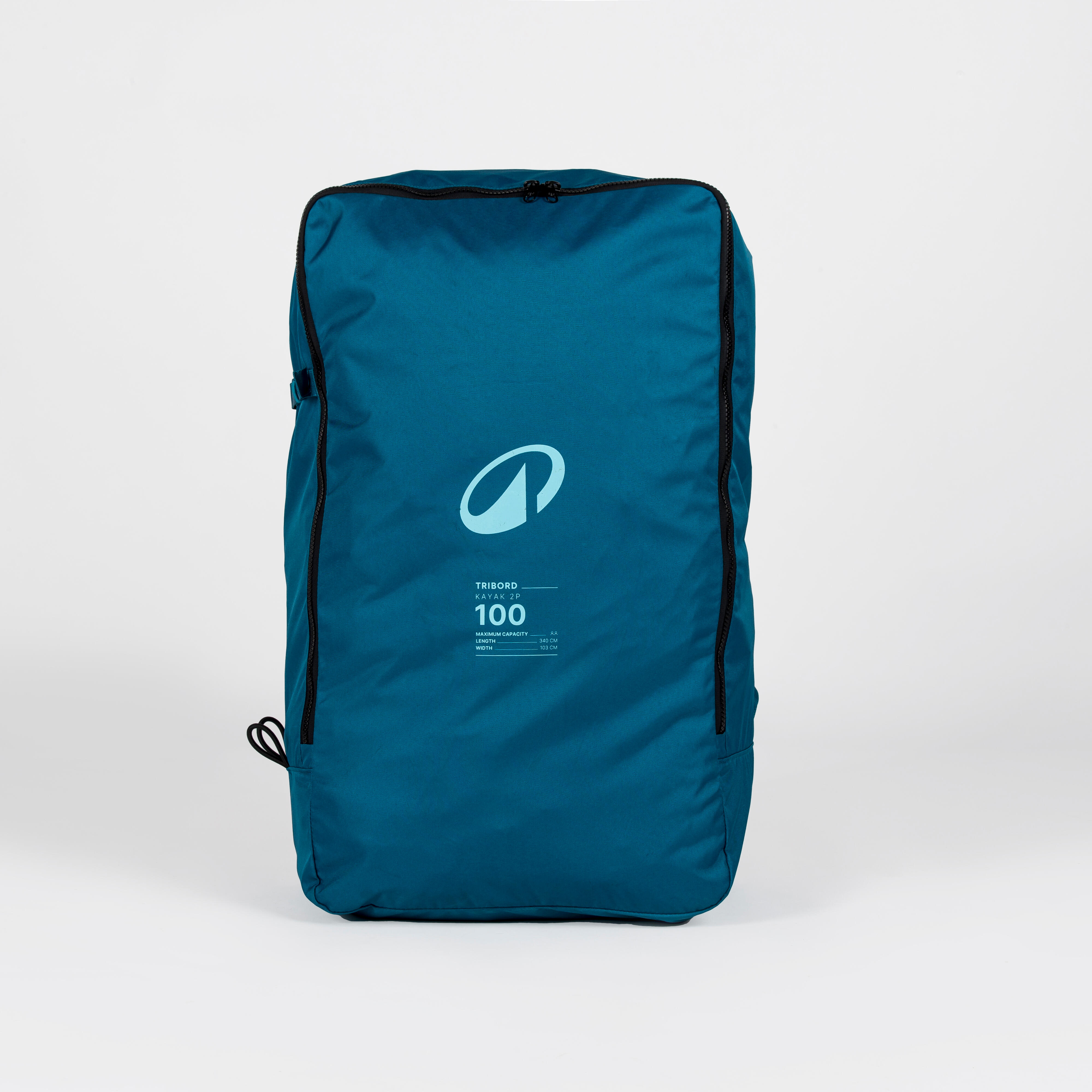
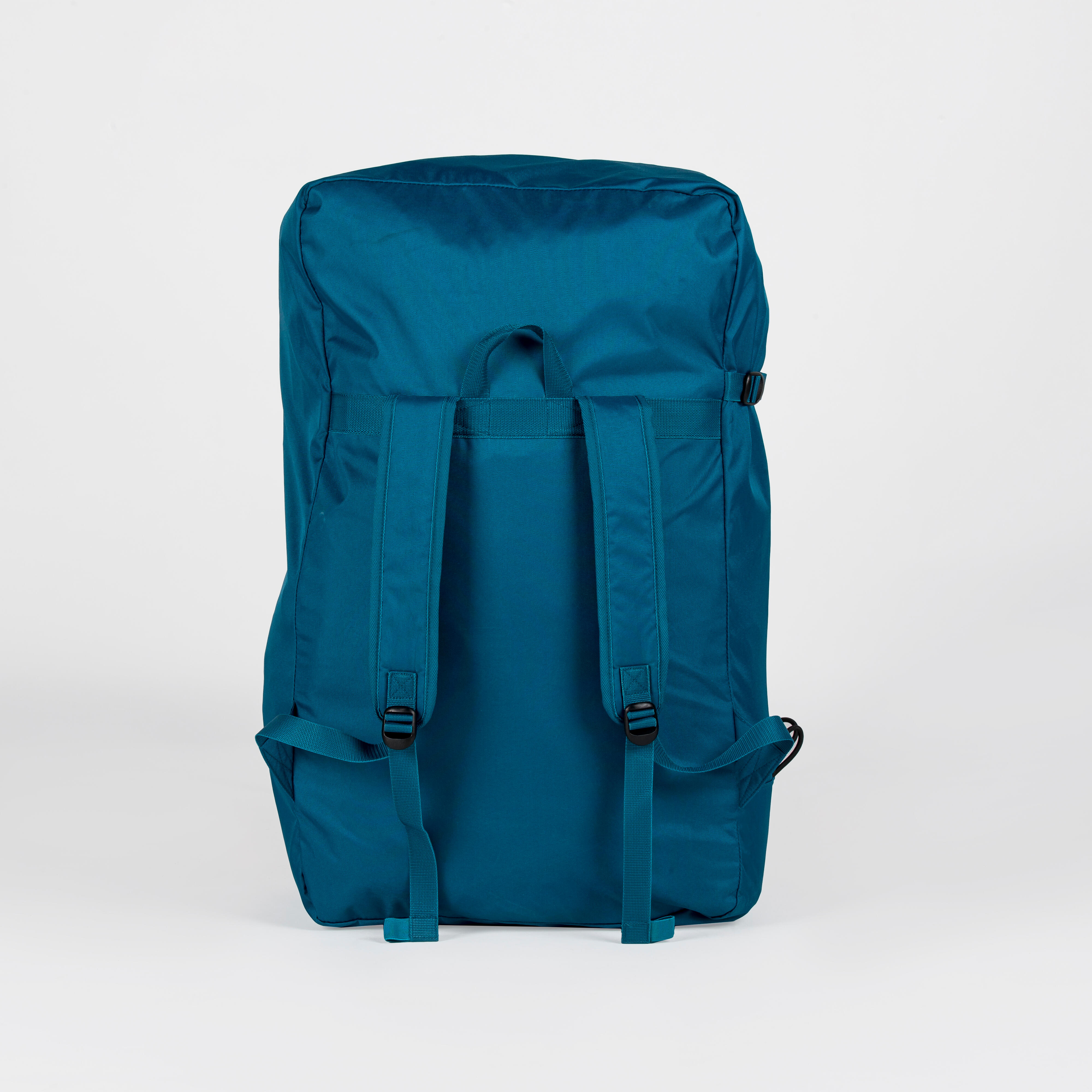
Folded dimensions in bag:
- Height: 67 cm
- Width: 44 cm
- Thickness: 30 cm
Weight: 14 kg
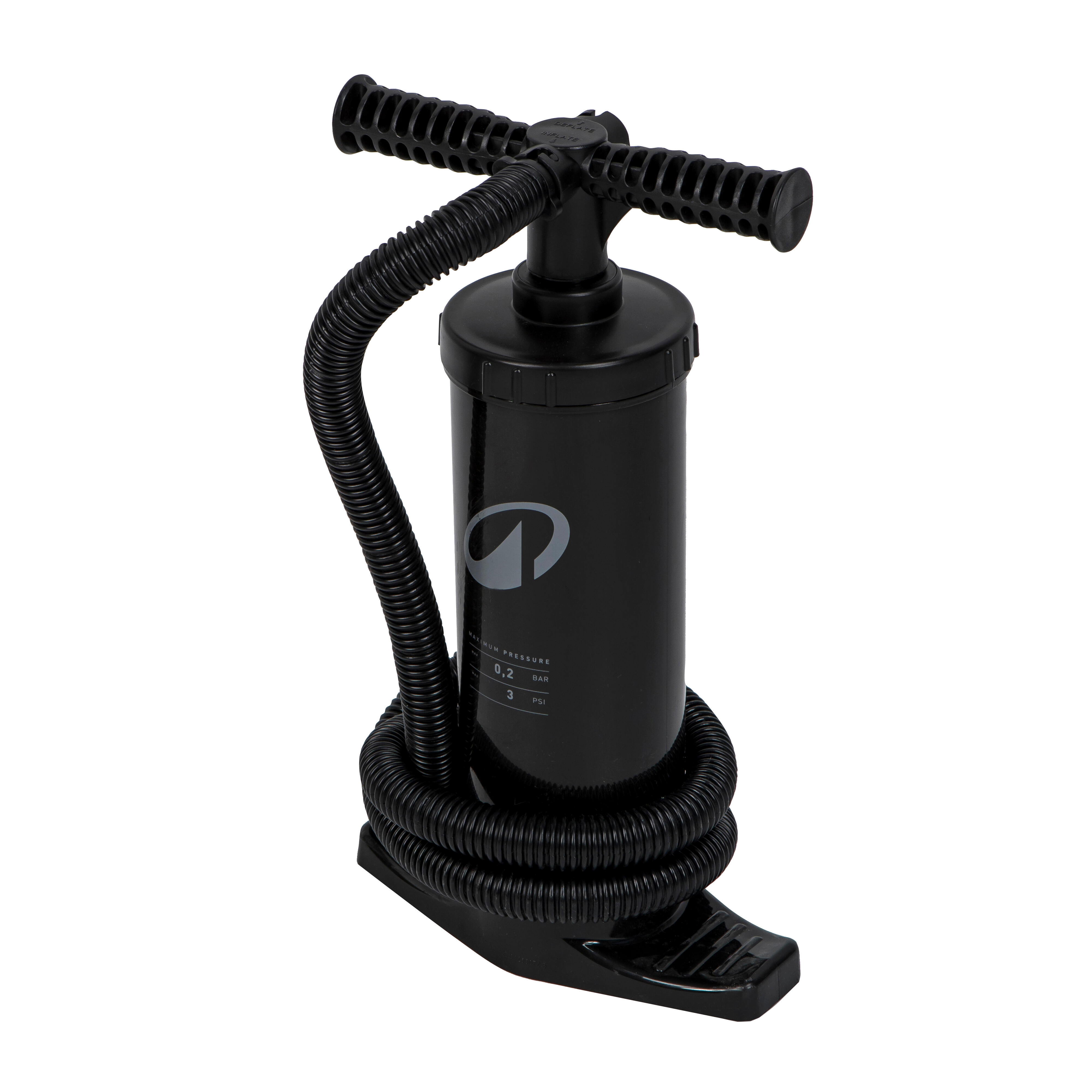
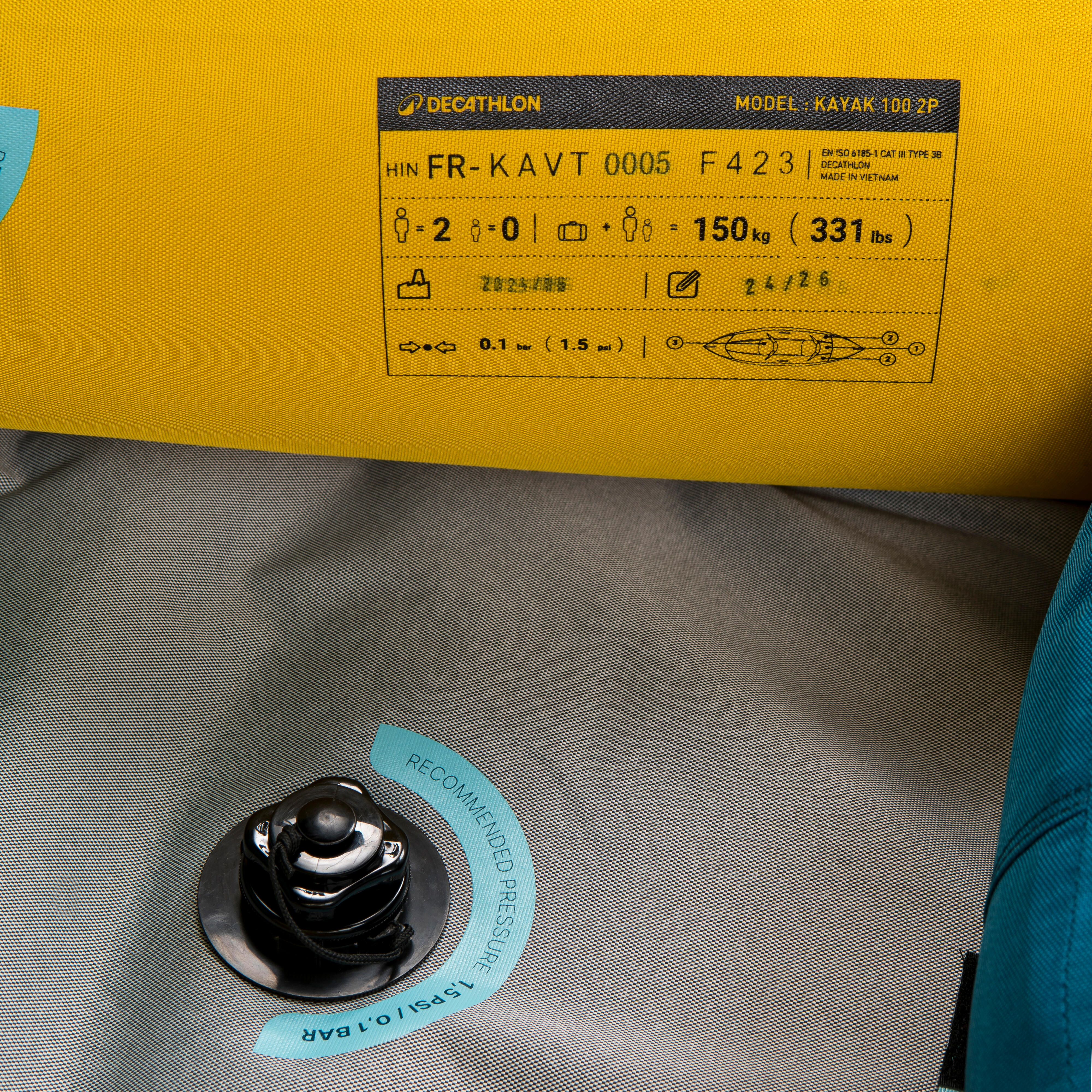
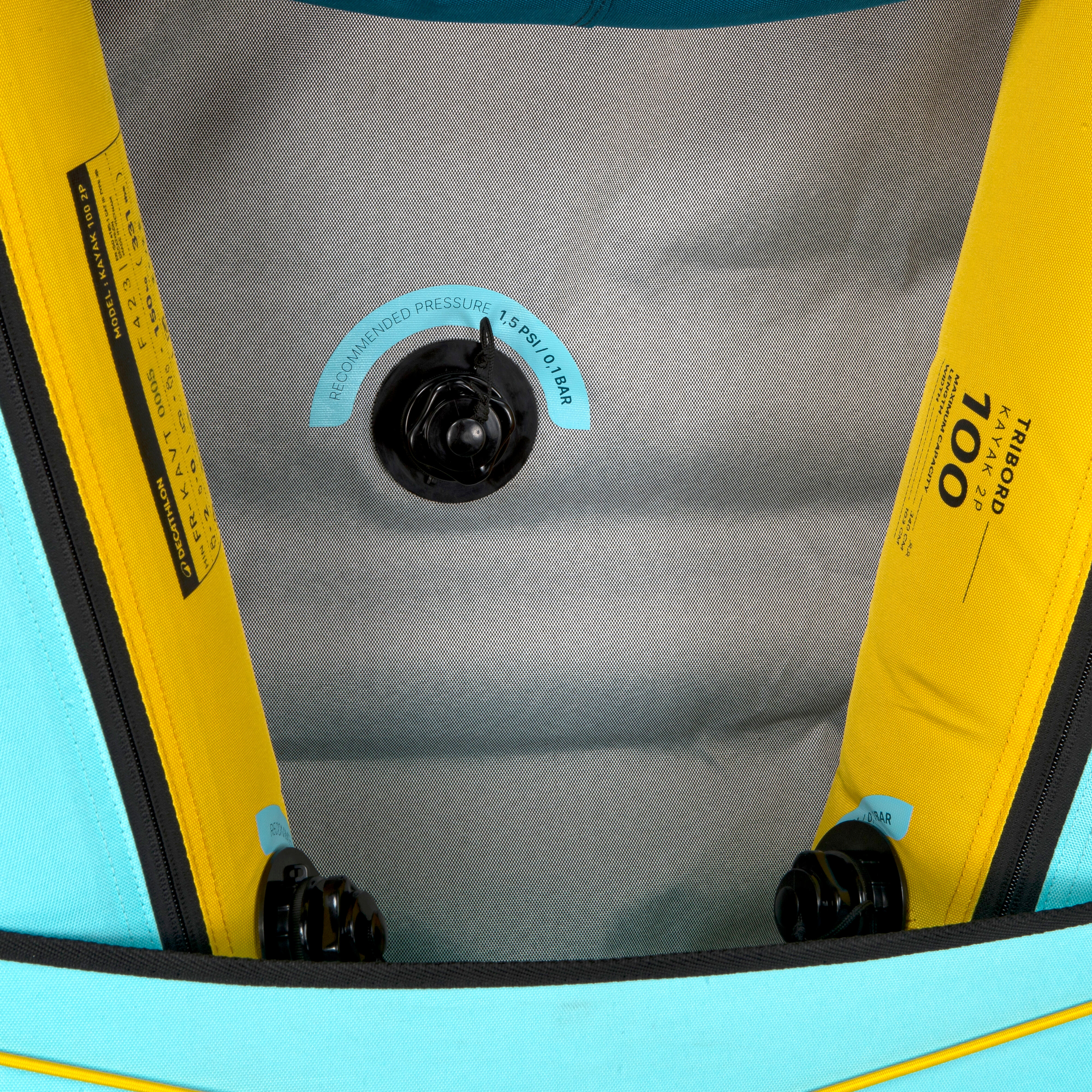
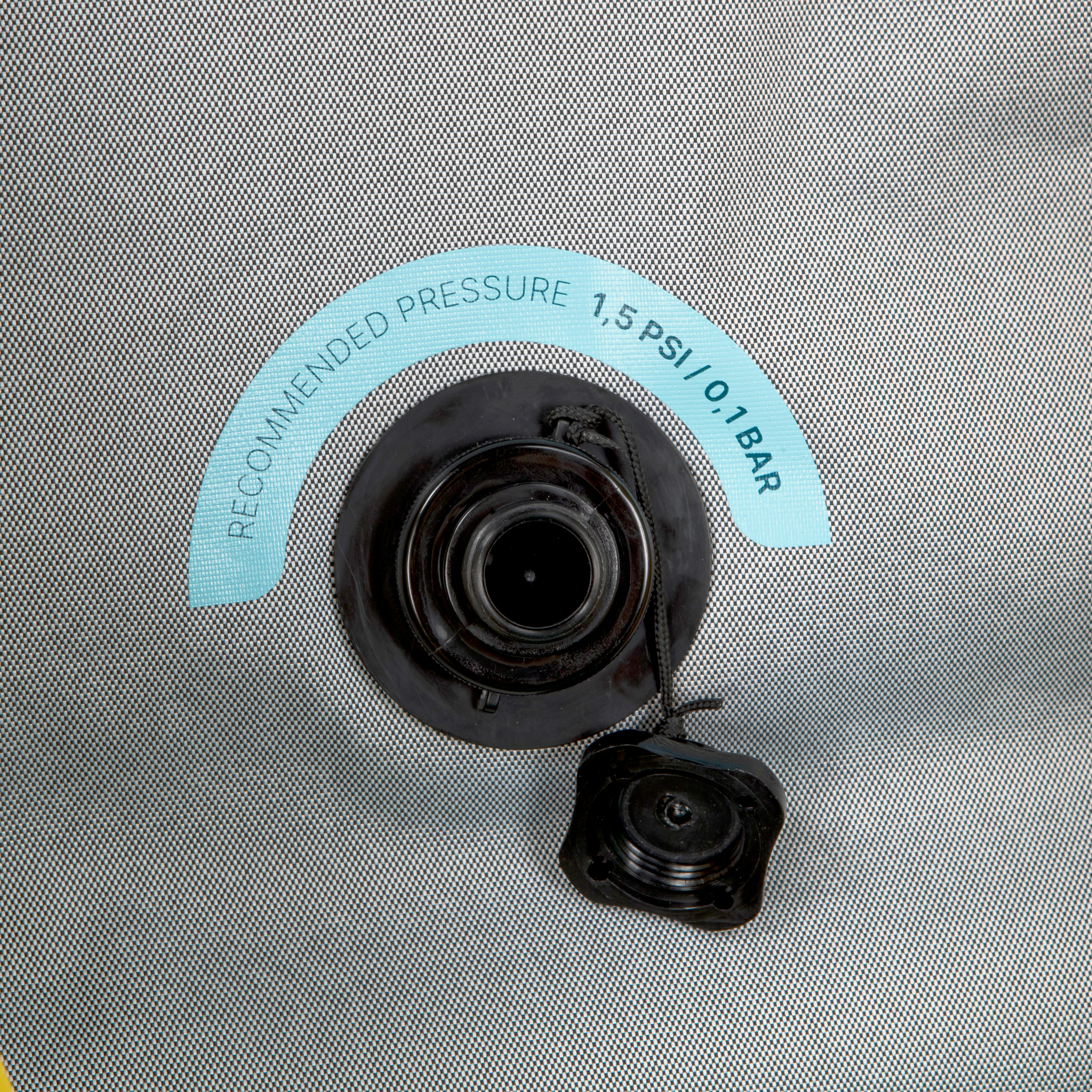
Maximum pressure: 0.1 bar (1.5 psi)
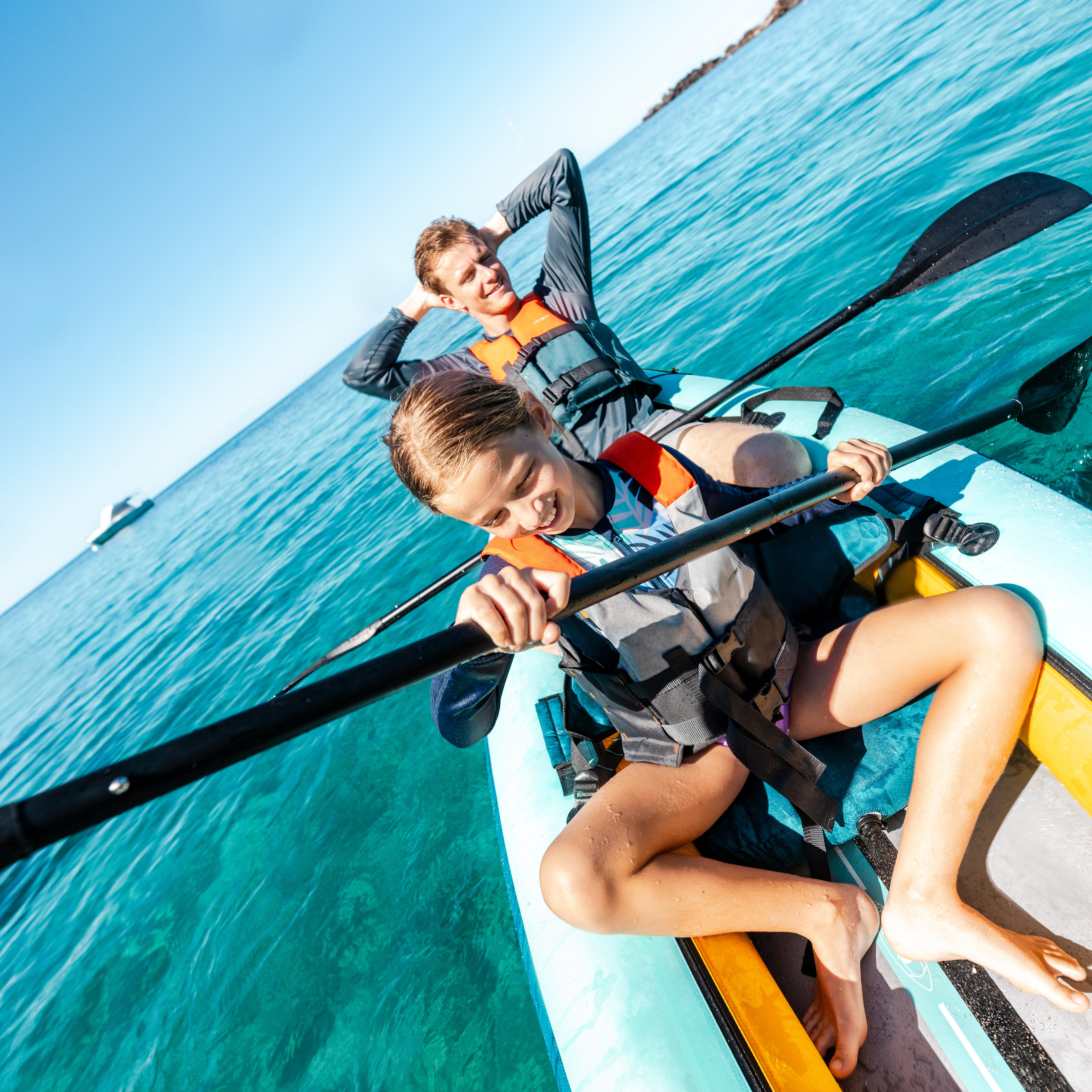
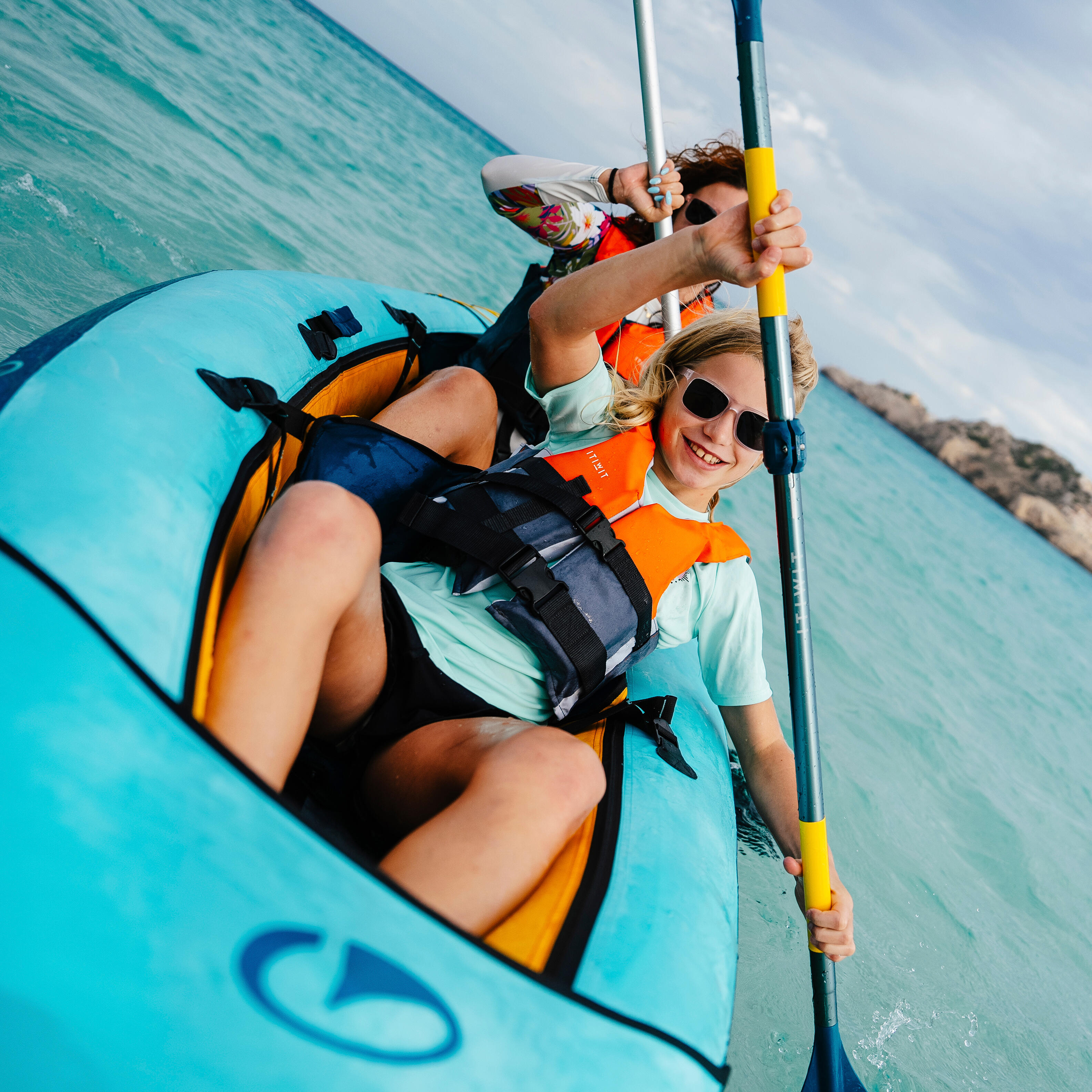
Number of seats: 1 or 2 seats with a limit of 150 kg (331 lbs).
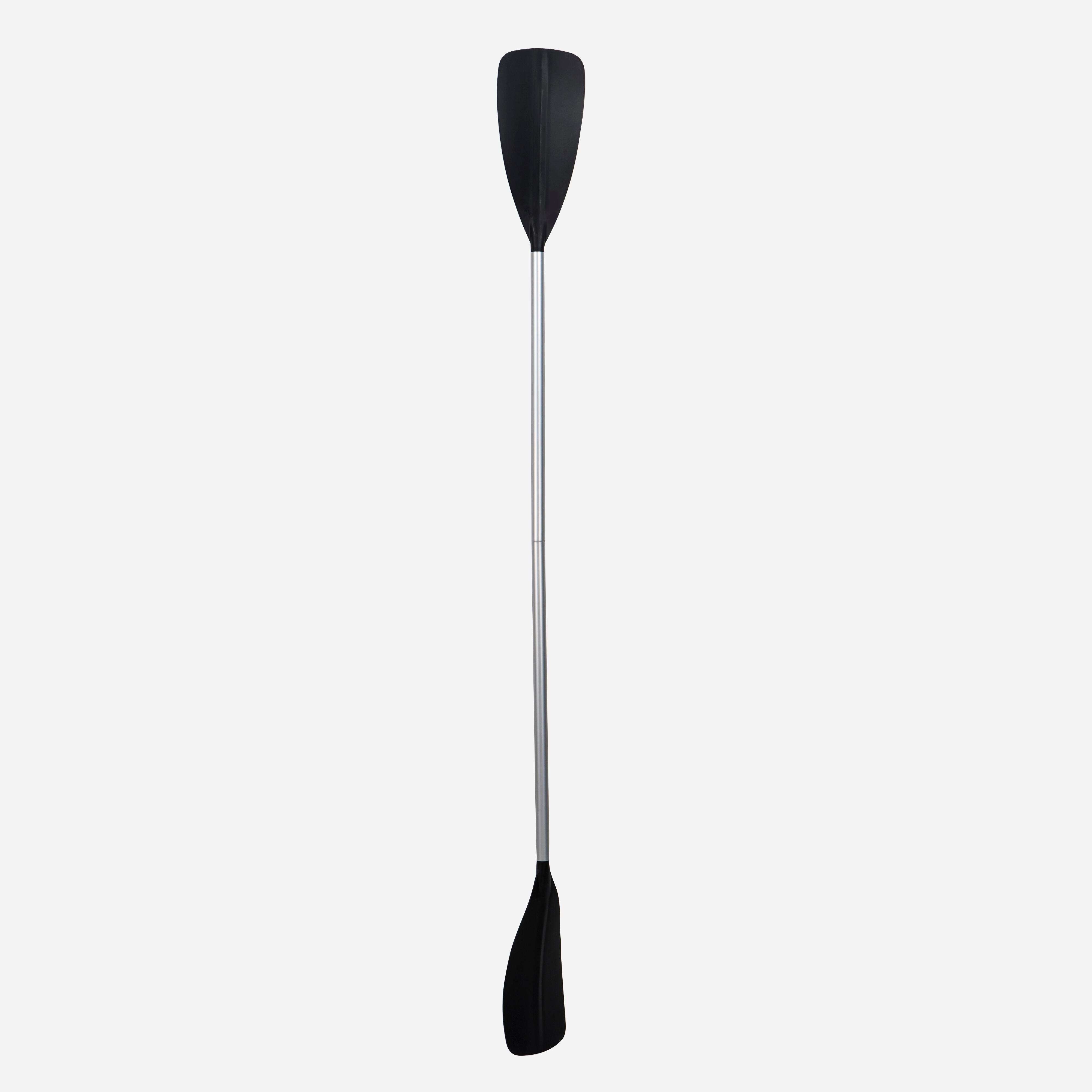
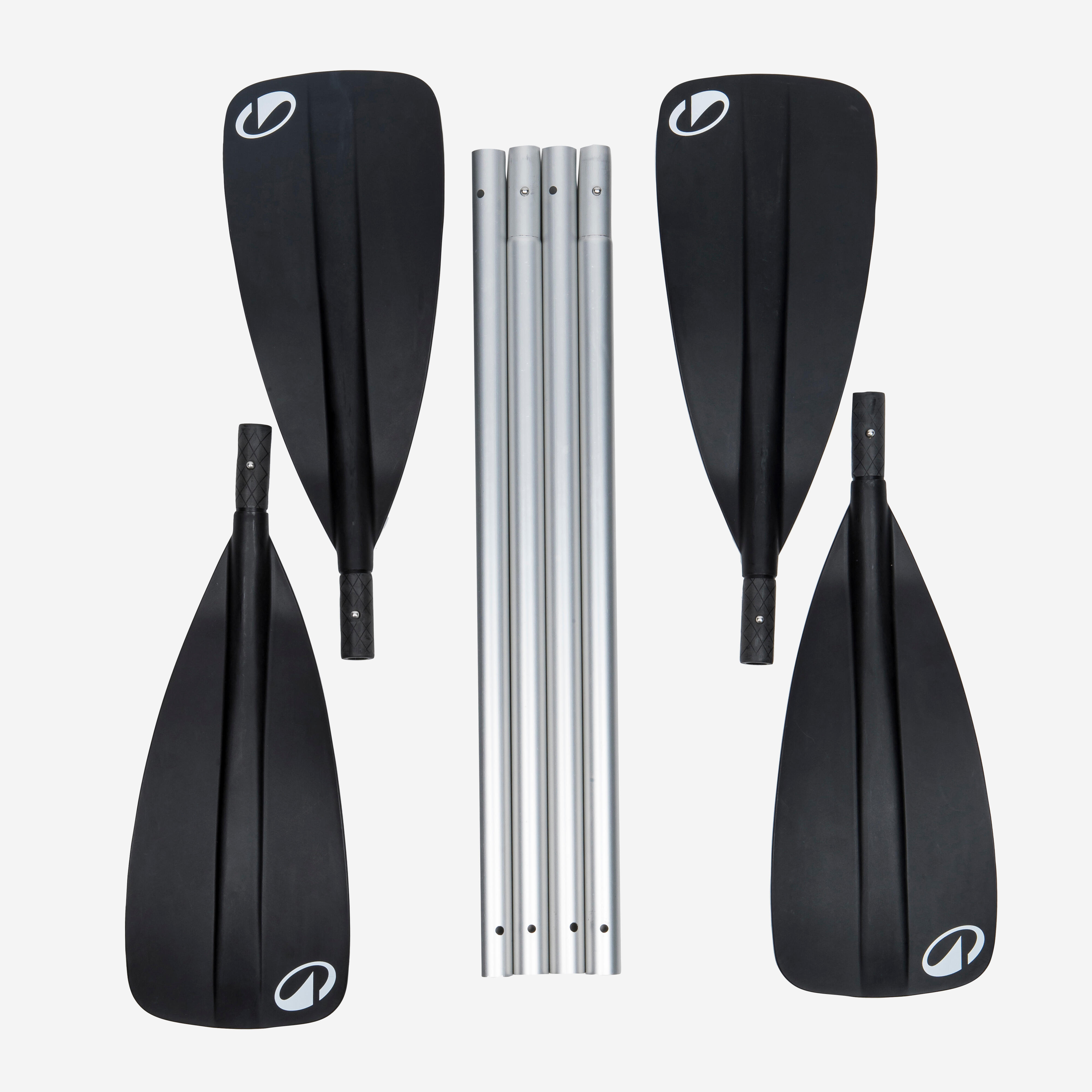
Paddles: 2x 4-part paddles
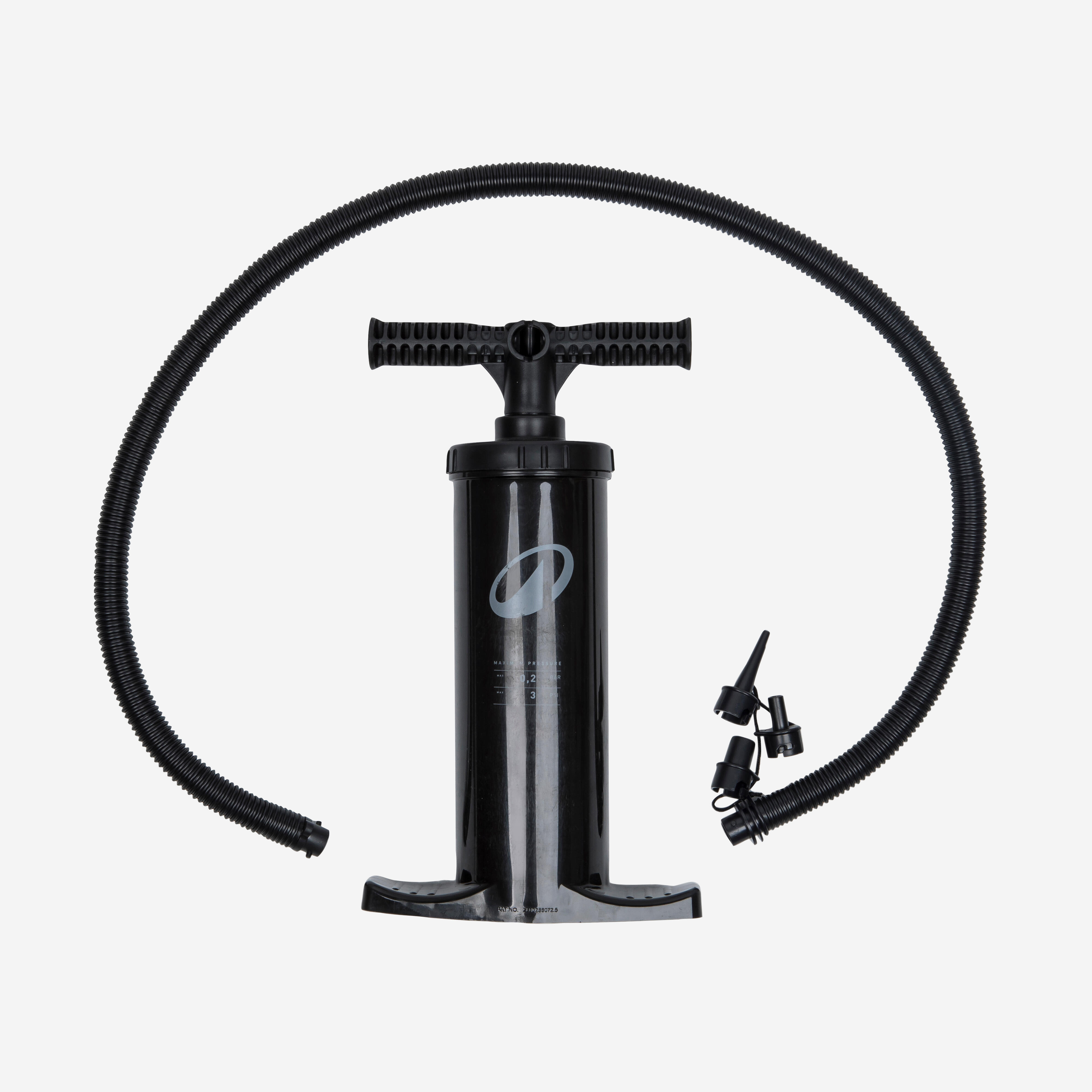
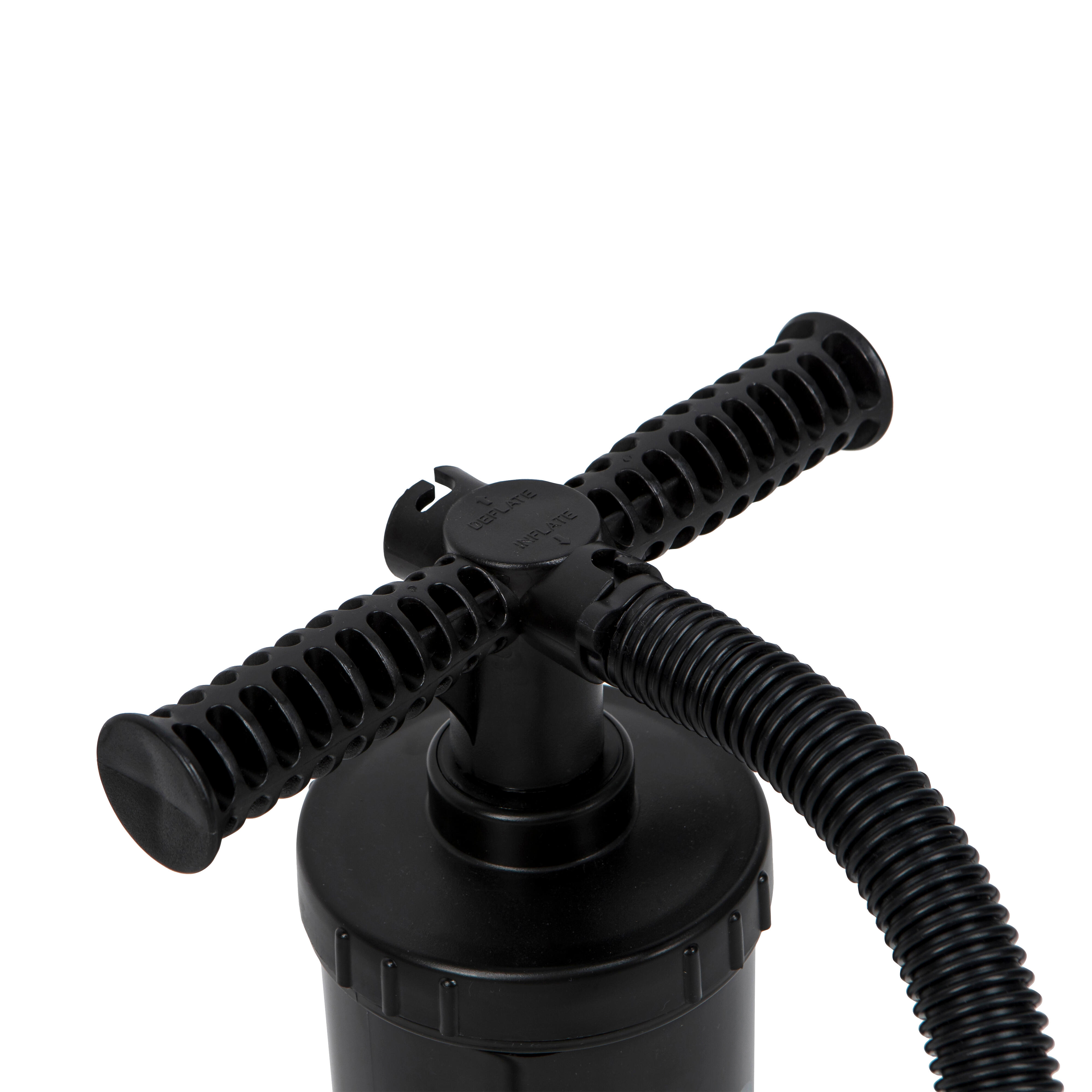
Pump: 1 manual pump
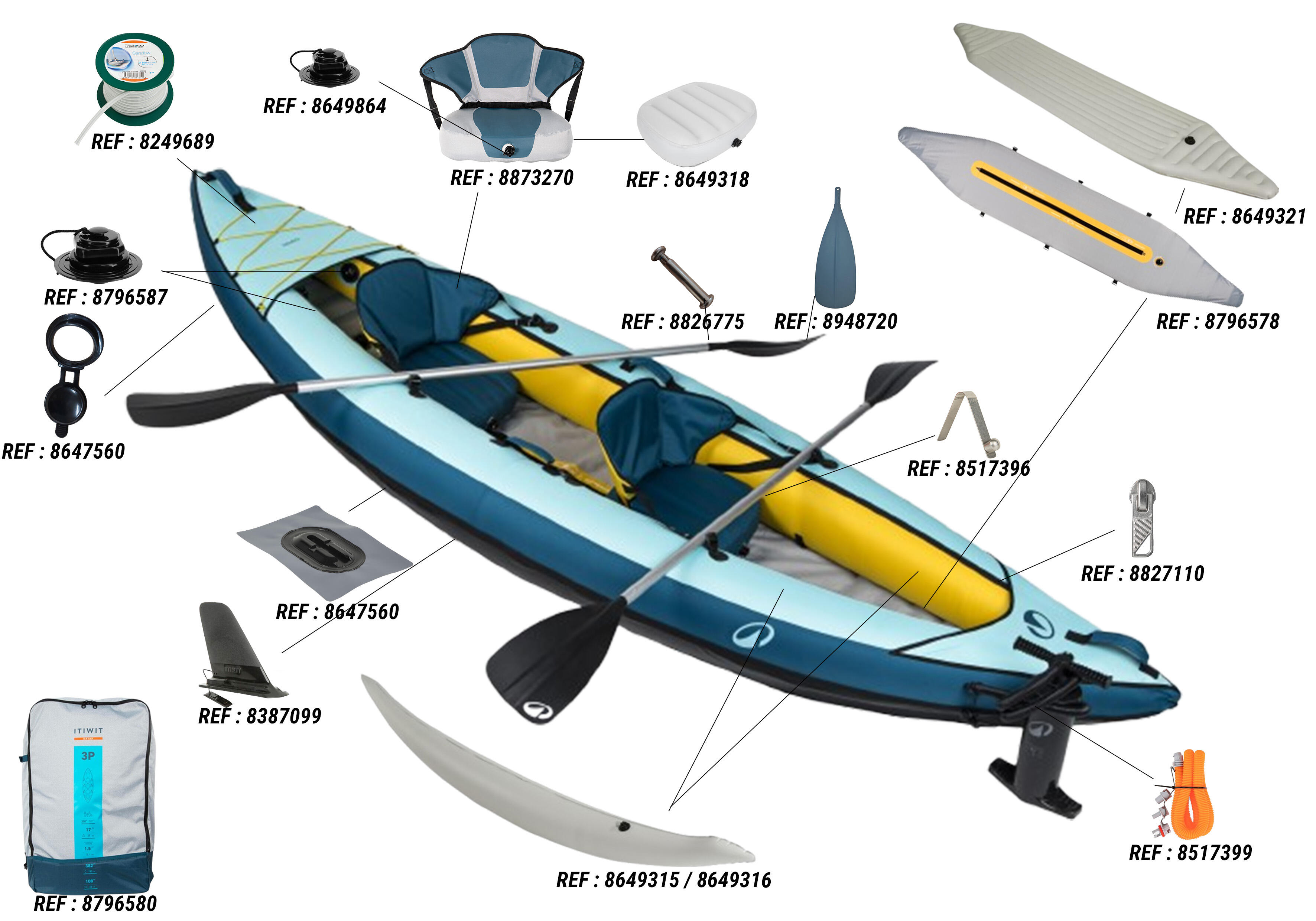
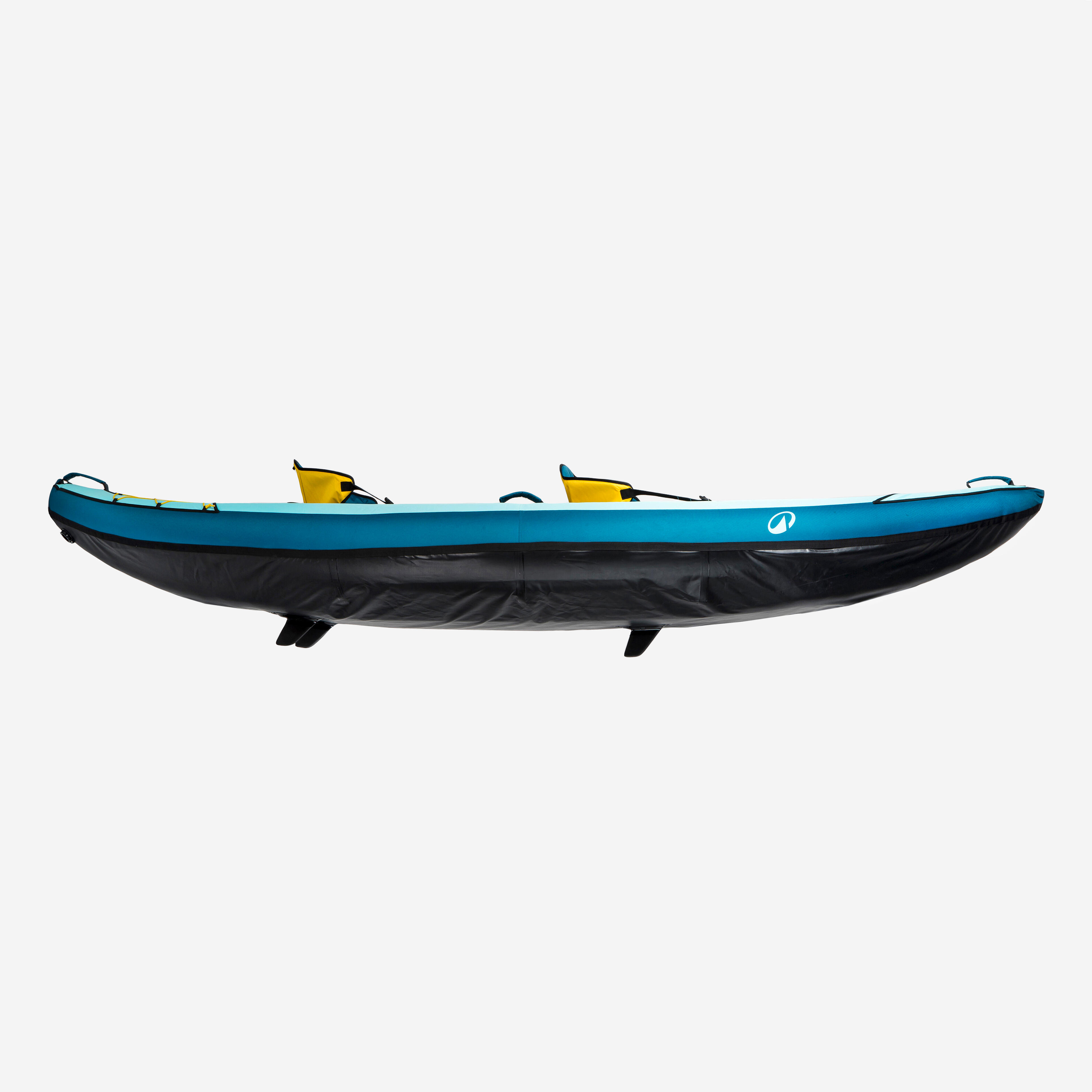
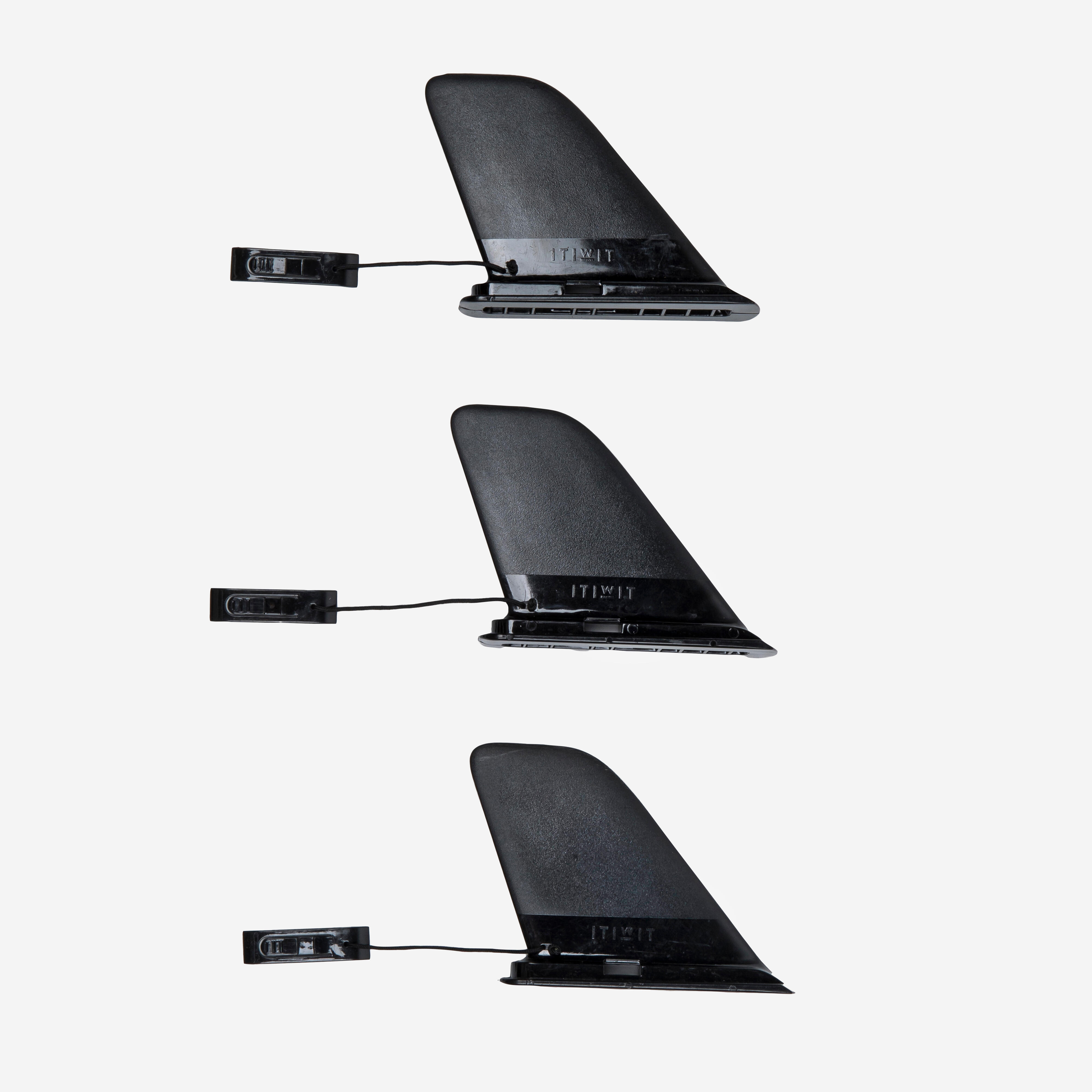
Pack contents kayak, 2 seats, 2 paddles, pump, bag, repair kit, fins.
What is the back support like?
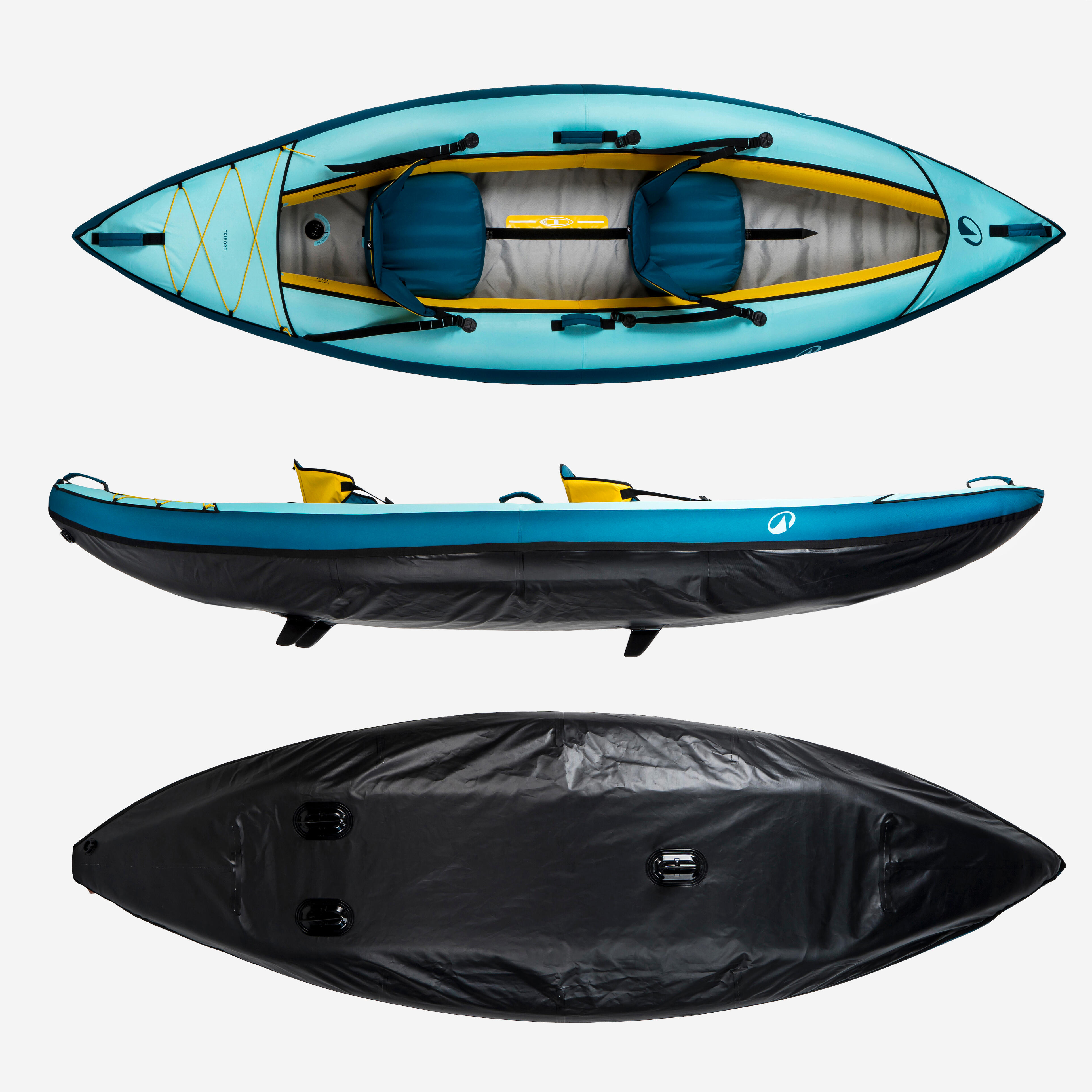
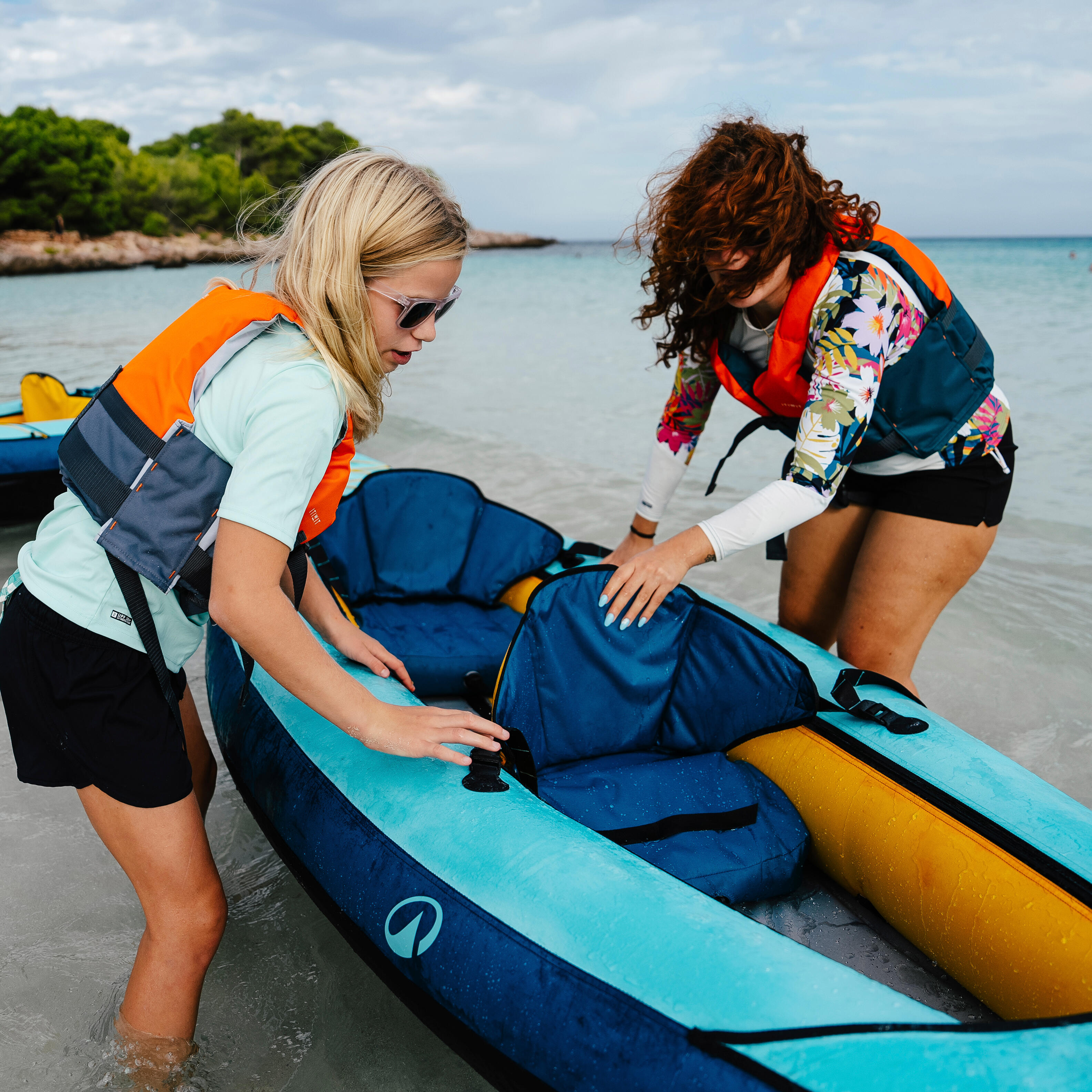
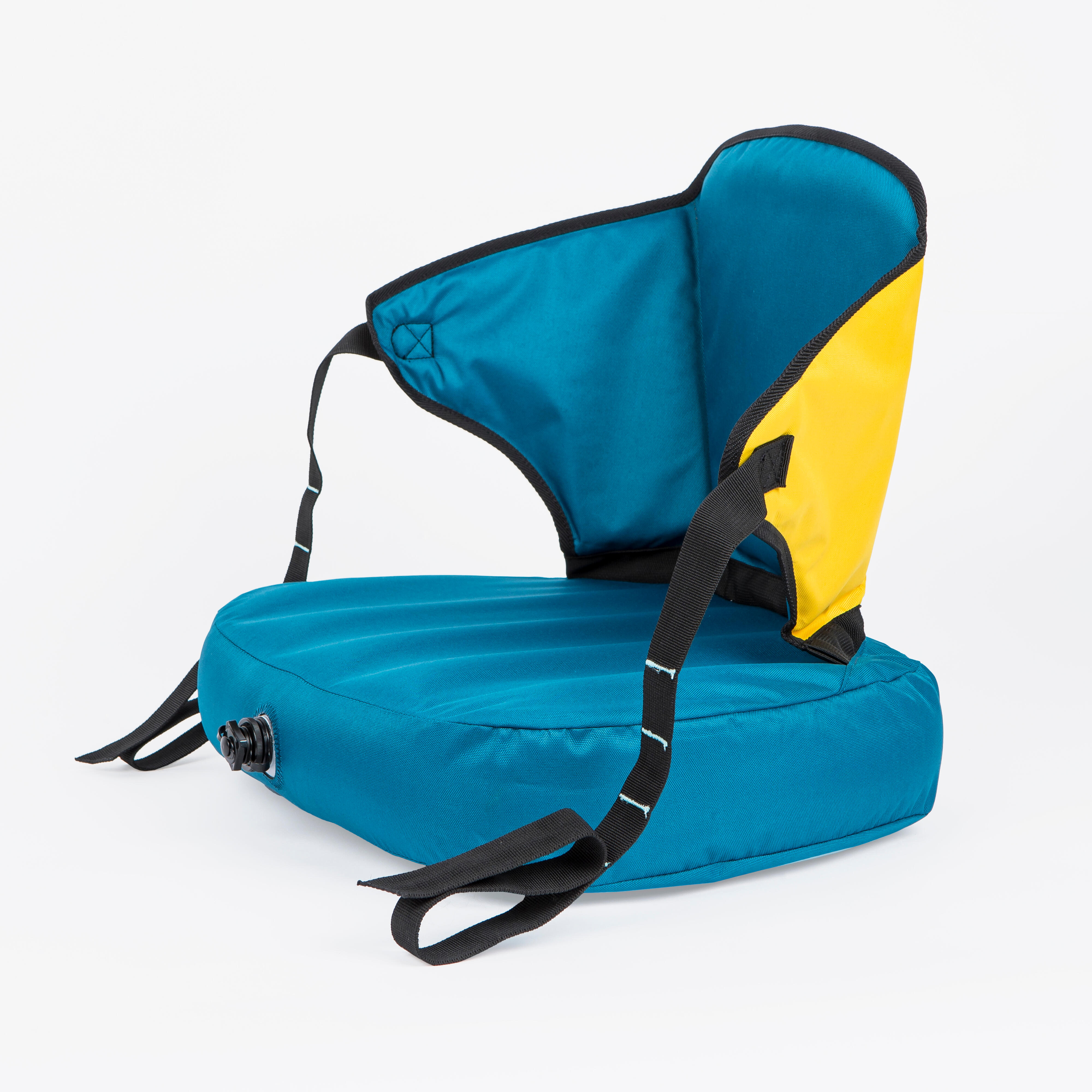
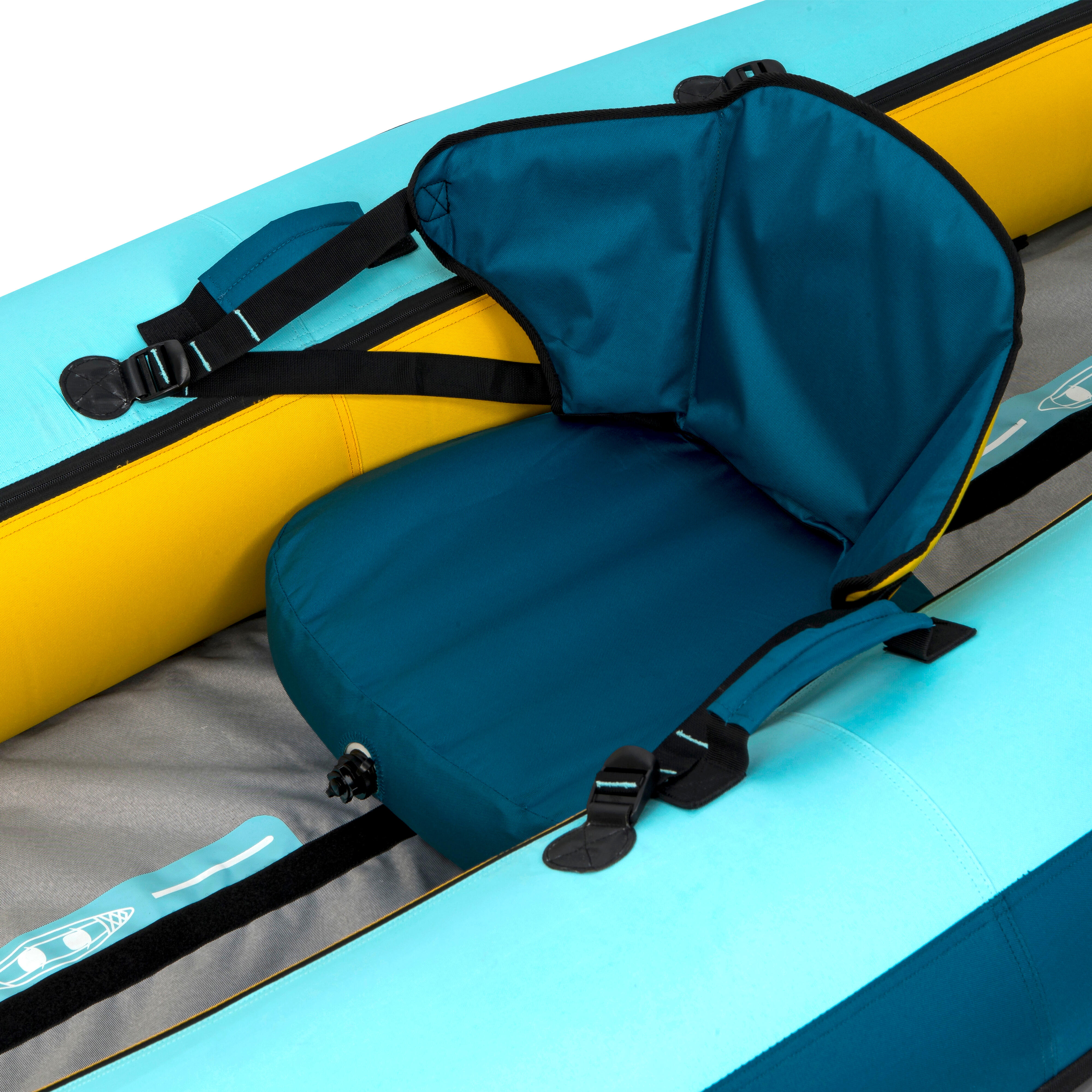
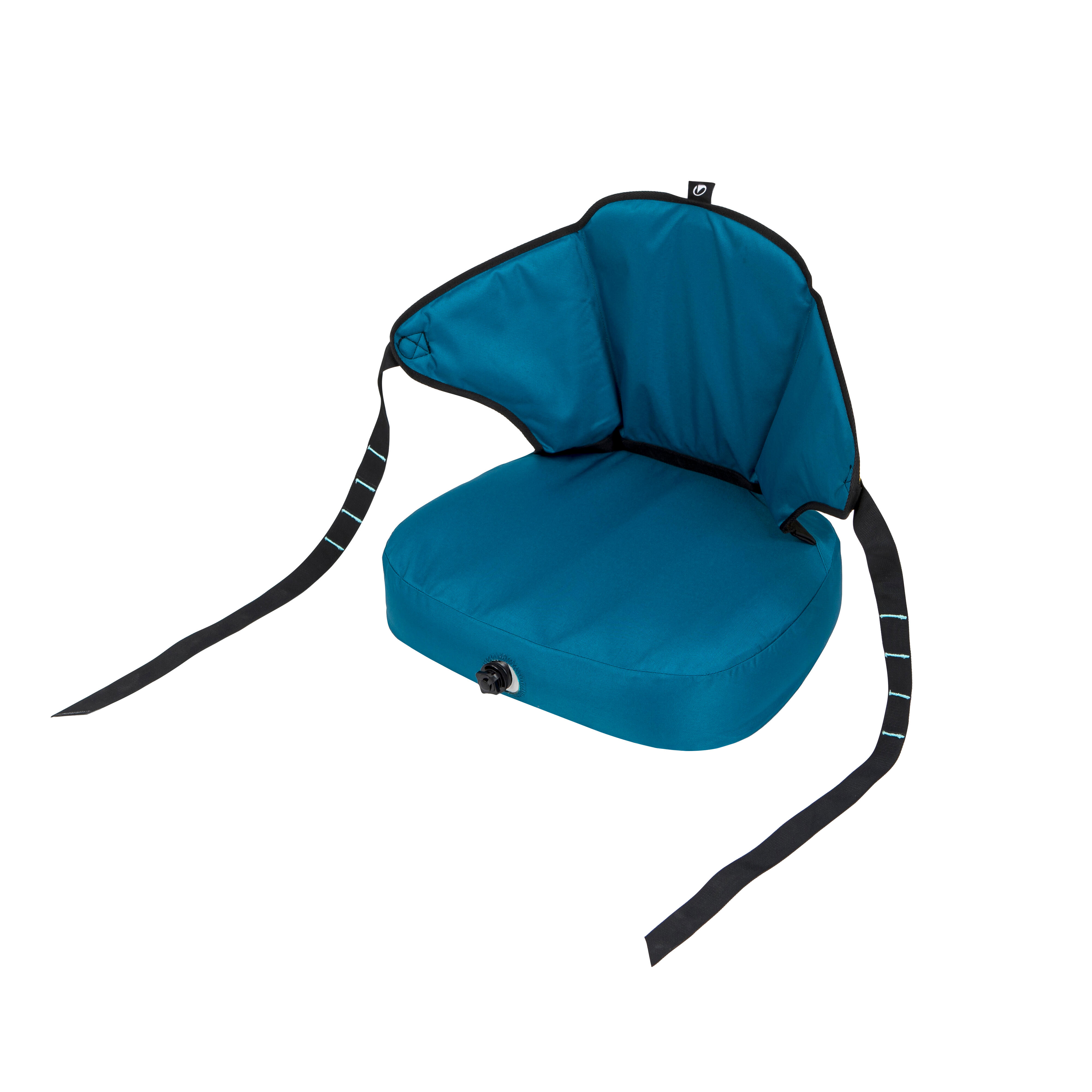
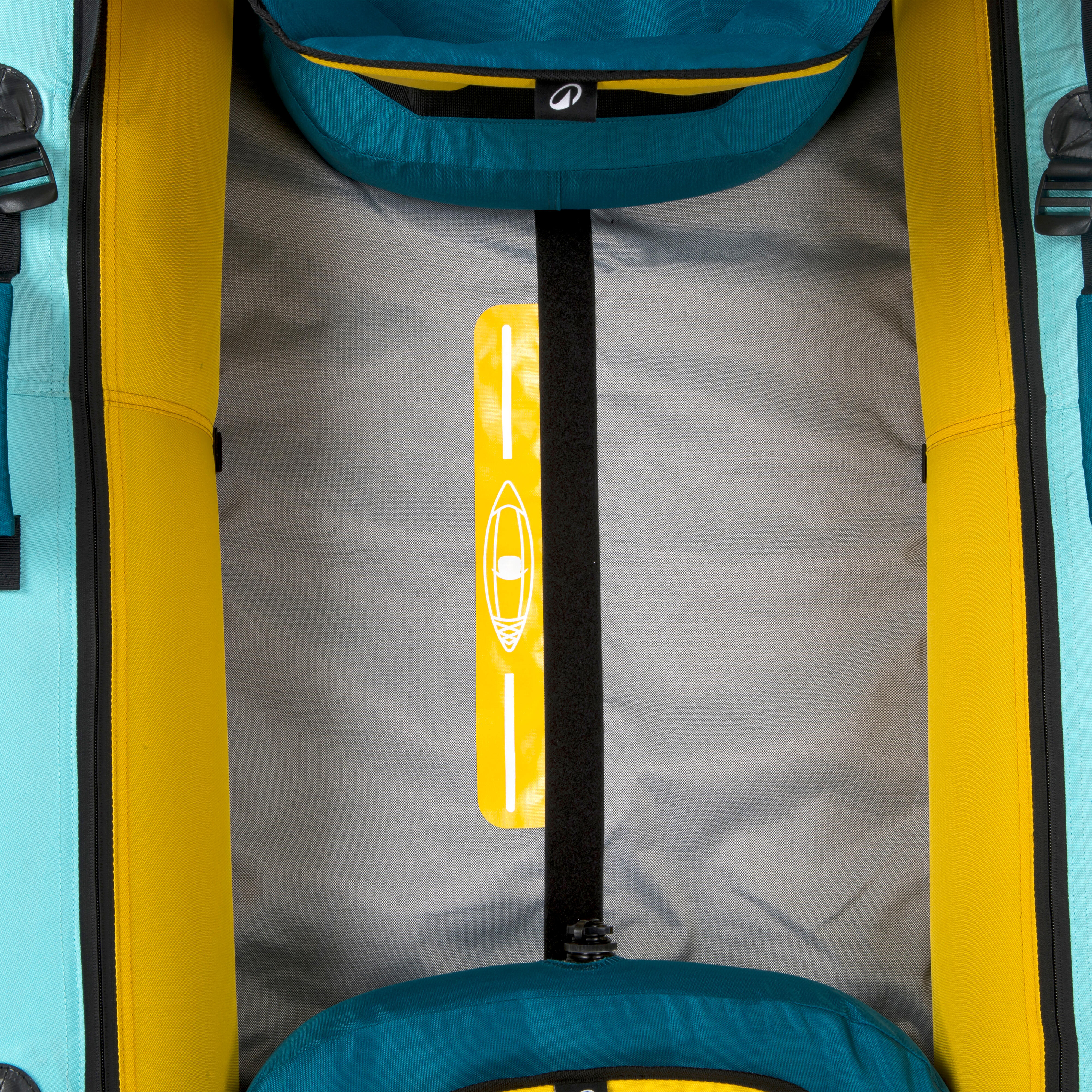
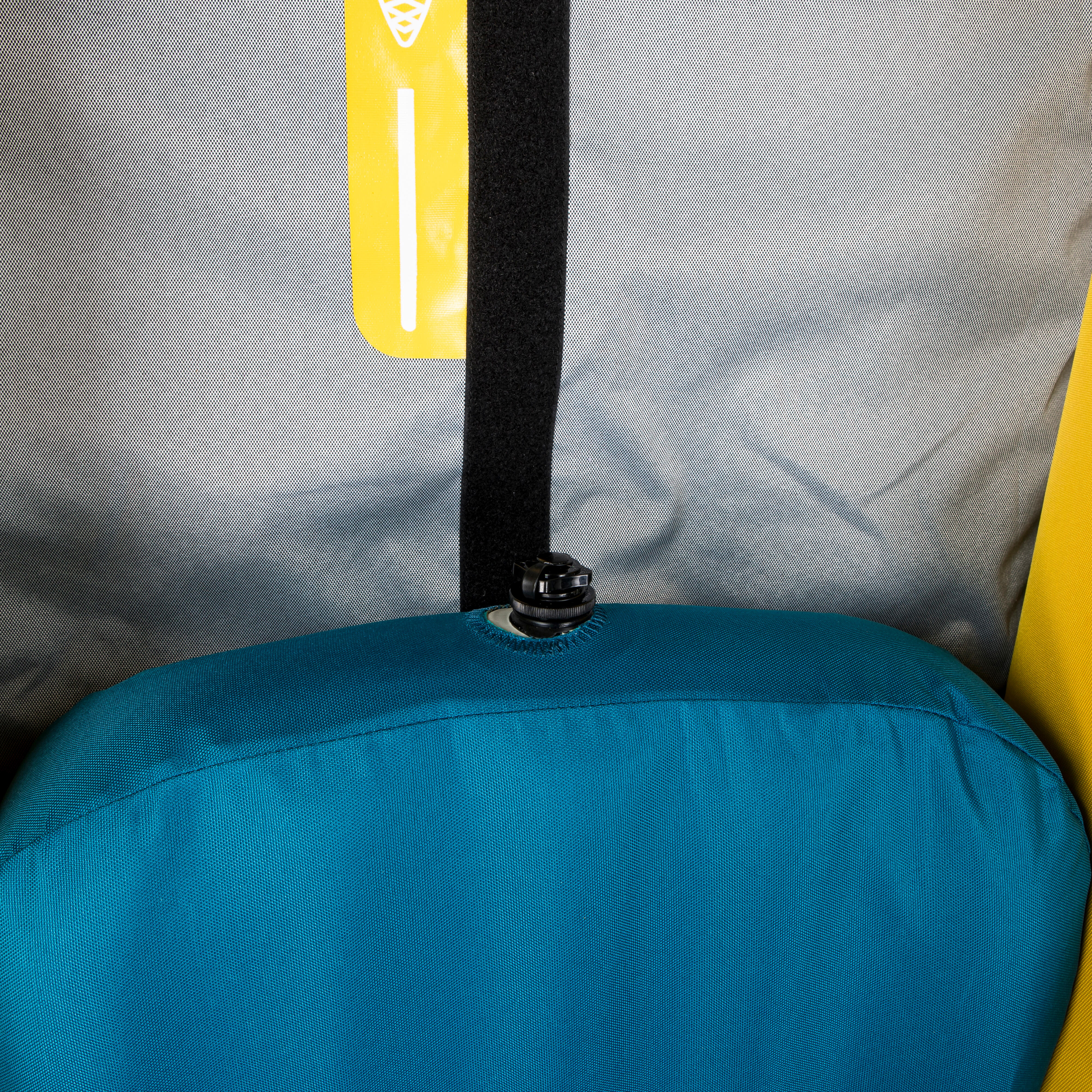
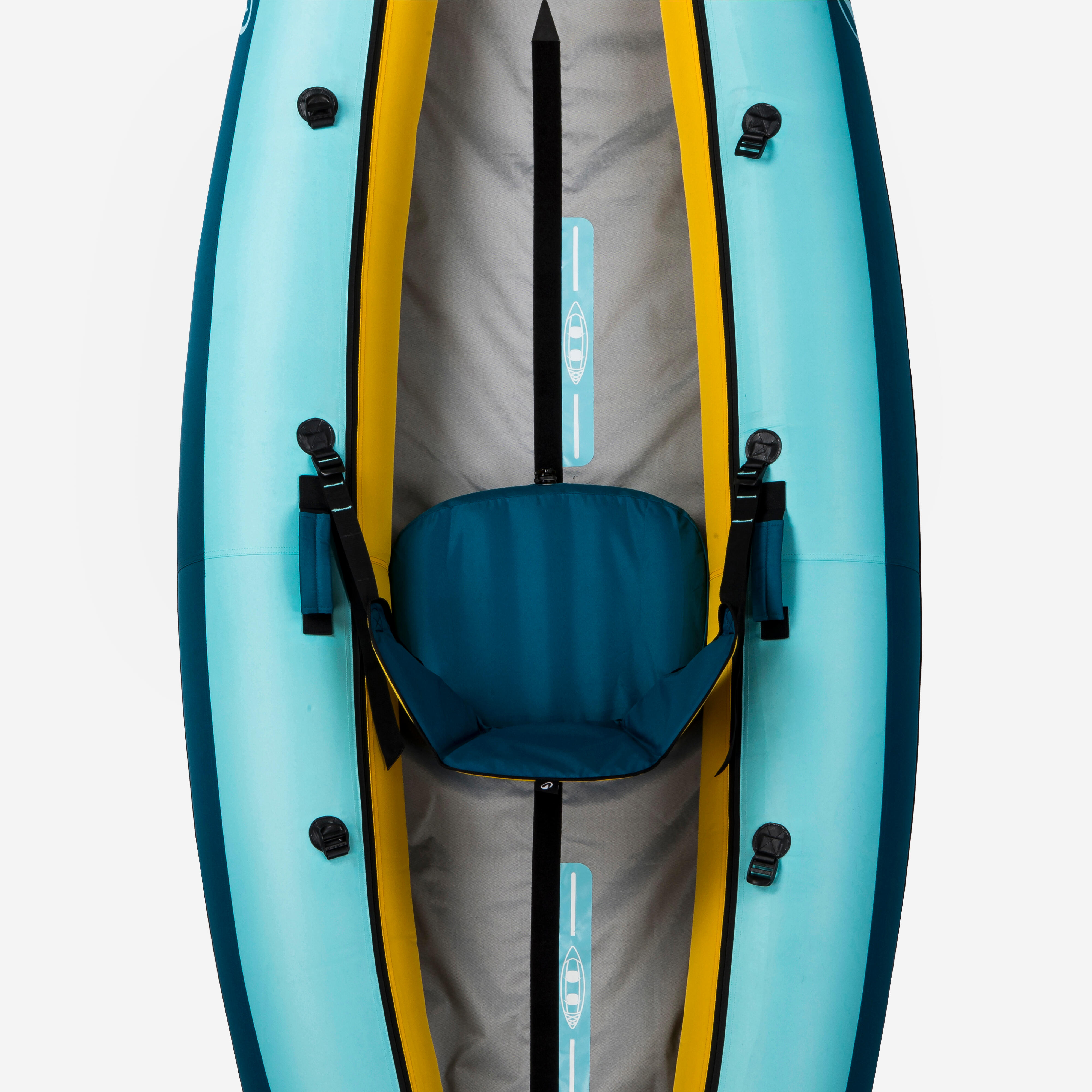
This kayak features an inflatable seat and a low backrest for lumbar support.
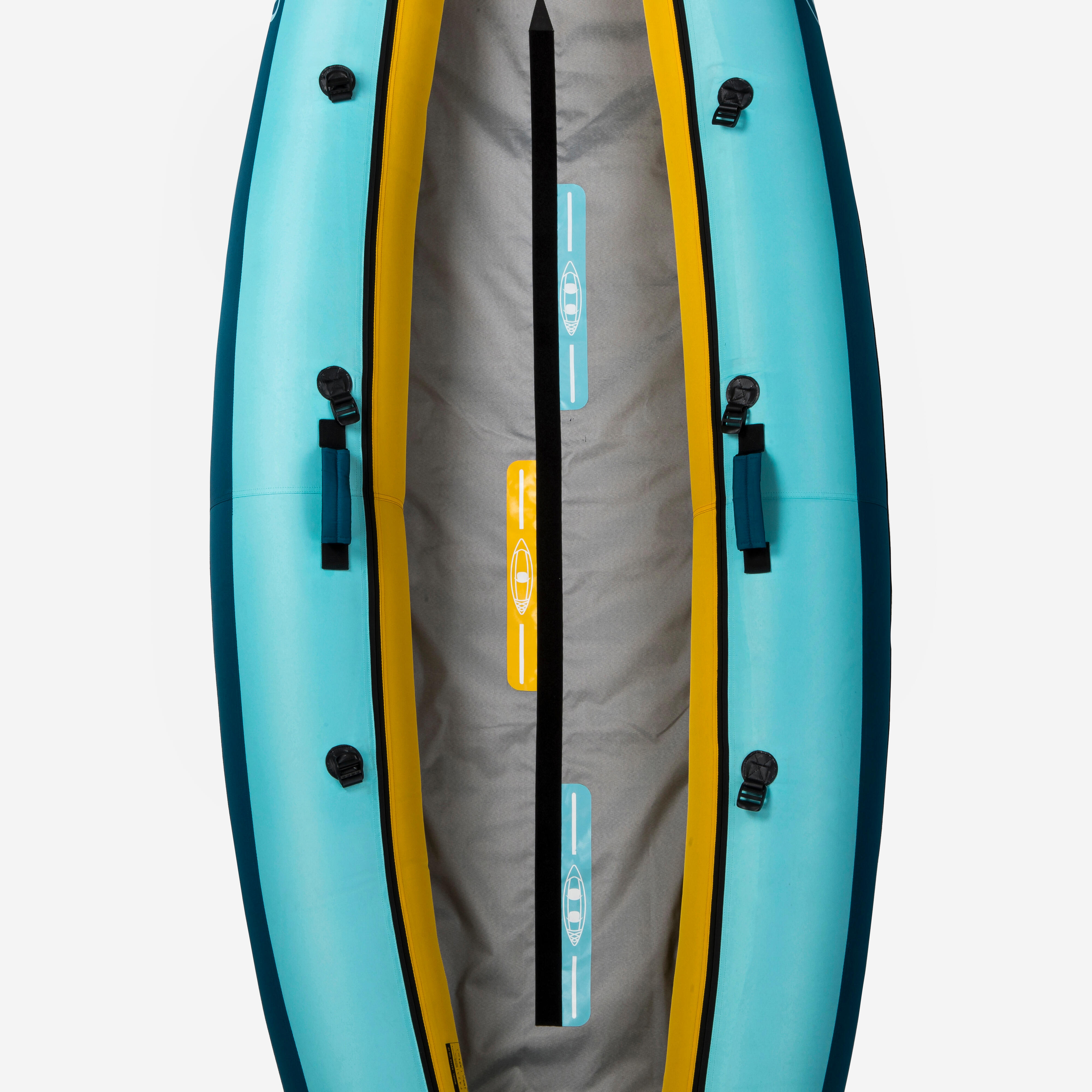
The seats are positioned according to the number of paddlers. To set them up: use the markings on the floor as a guide
How to inflate and position the floor of the kayak
Inflate the floor, then one of the side tubes, then the second one to 50%. Check the positioning of the bladders, then fully inflate to a maximum pressure of 0.1 bar (1.5 PSI). Then close the valves.
Do not over inflate!
Do not leave the kayak inflated in direct sunlight. In the event of EXTREME HEAT, slightly deflate the kayak out of the water to avoid over-inflation, which could damage the kayak.
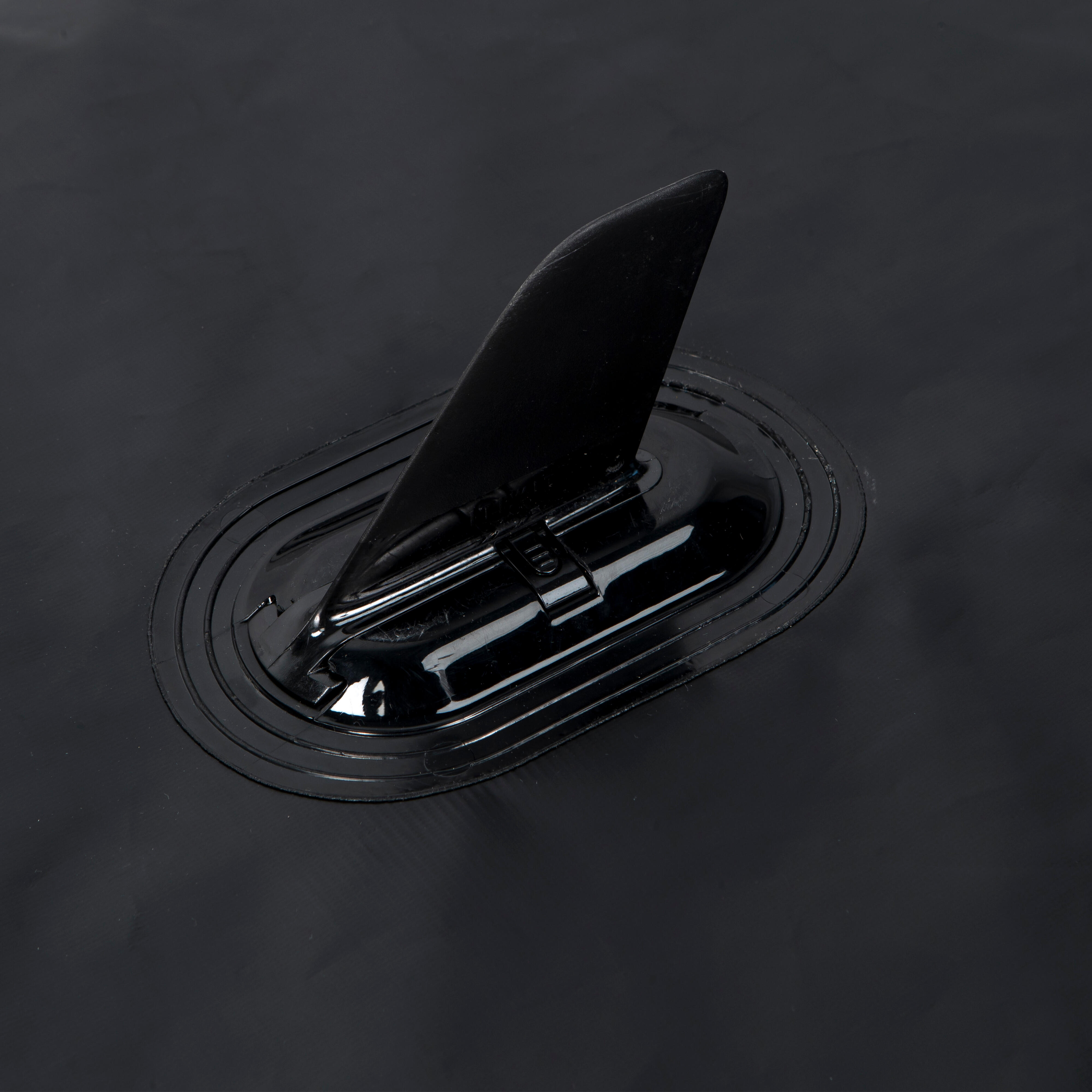
Install the three skegs, unless using on a river with a low water level.
How to deflate and store the kayak
Rinse the kayak and leave it to dry.
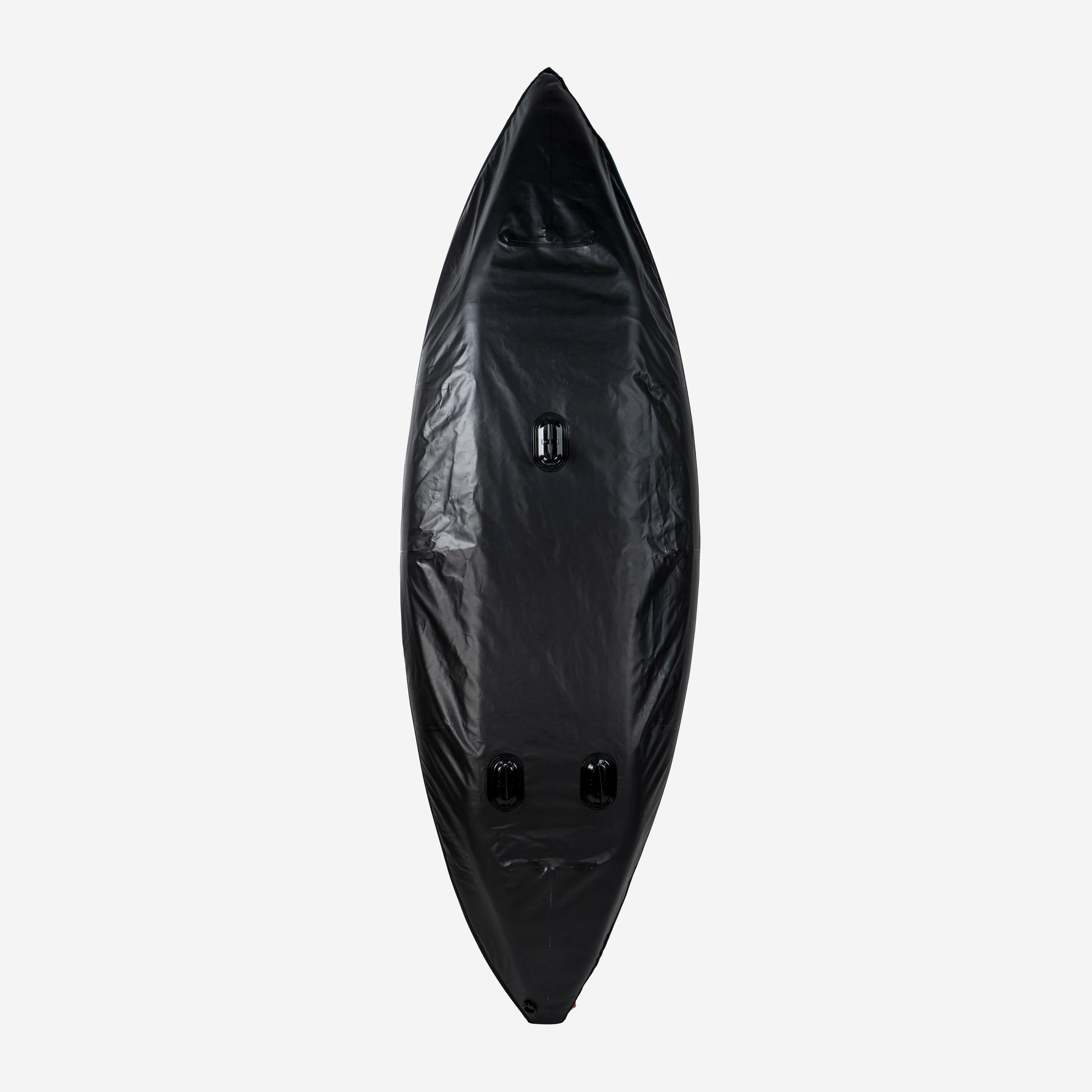
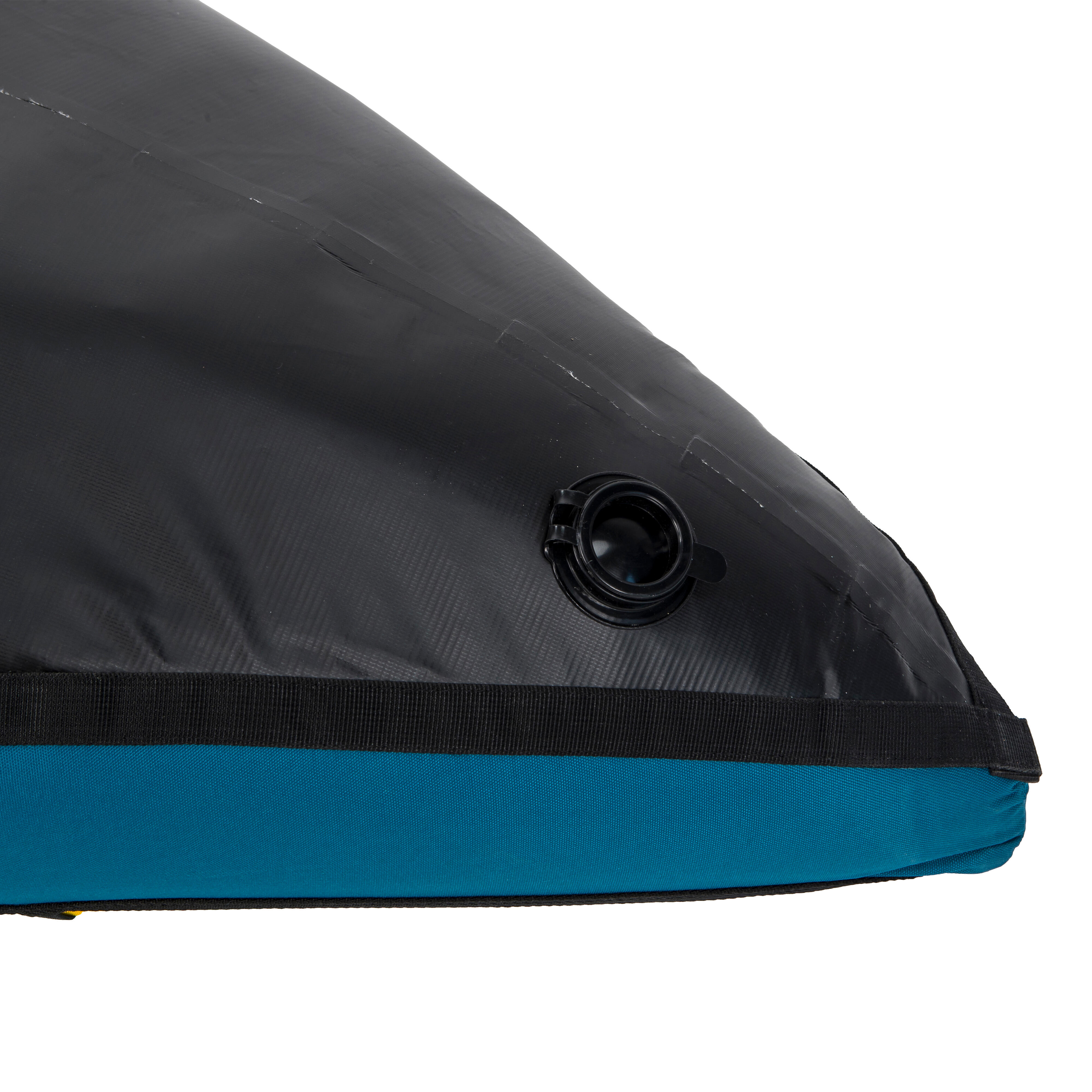
Deflate the kayak by opening the 3 Boston valves.
Fold the lateral tubes down onto the floor.
Roll starting from the opposite side to the valves to remove the air.
Place the rolled-up kayak into the main compartment of the bag.
Tighten using the compression strap.
Zip up the bag
What should you do if your kayak has a puncture?
If a side bladder is damaged, unzip the side tube lengthways and remove the bladder.
The floor can be uncovered by opening the rip-tab fastenings.
- Case 1: the hole is in the side tube; you can use the repair kit to stick on a patch.
- Case 2: the hole is located along a seam; contact the DECATHLON workshop service to exchange the faulty bladder (two-year warranty).
Canoeing and kayaking regulations
Is your canoe-kayak inflatable or rigid and is less than 3.50 metres? You have what is called a beach craft.
You must always stay within 300 metres of a shelter (any place on the coast where any craft or vessel and its crew can get to safety by anchoring or berthing, and set off again without assistance).
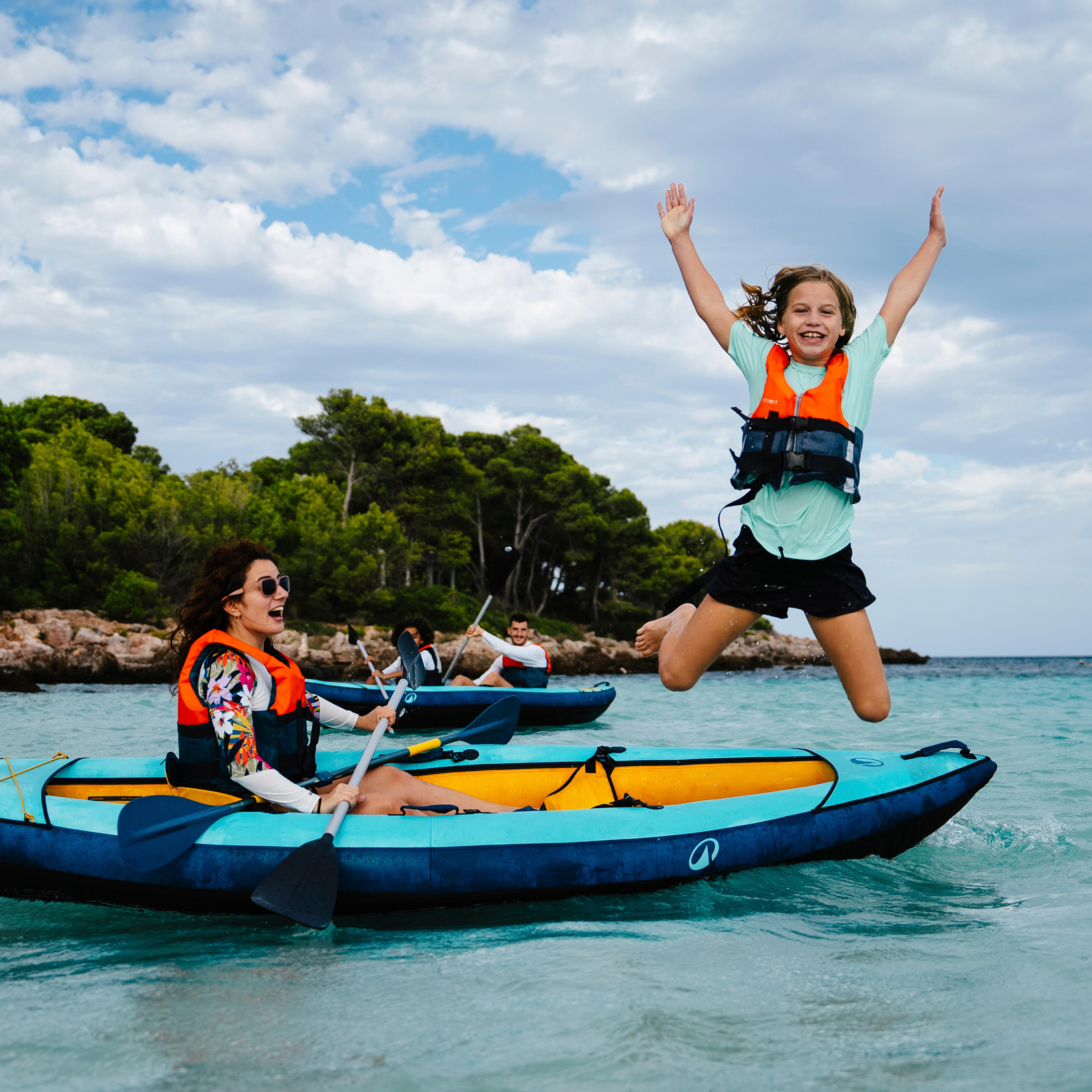
Buoyancy life vests are not mandatory but strongly recommended to make it easier to get back in the boat if you fall out.